CivilEng, Vol. 5, Pages 576-590: Blast Wave Simulator for Laminated Glass Panels Experimental Evaluation
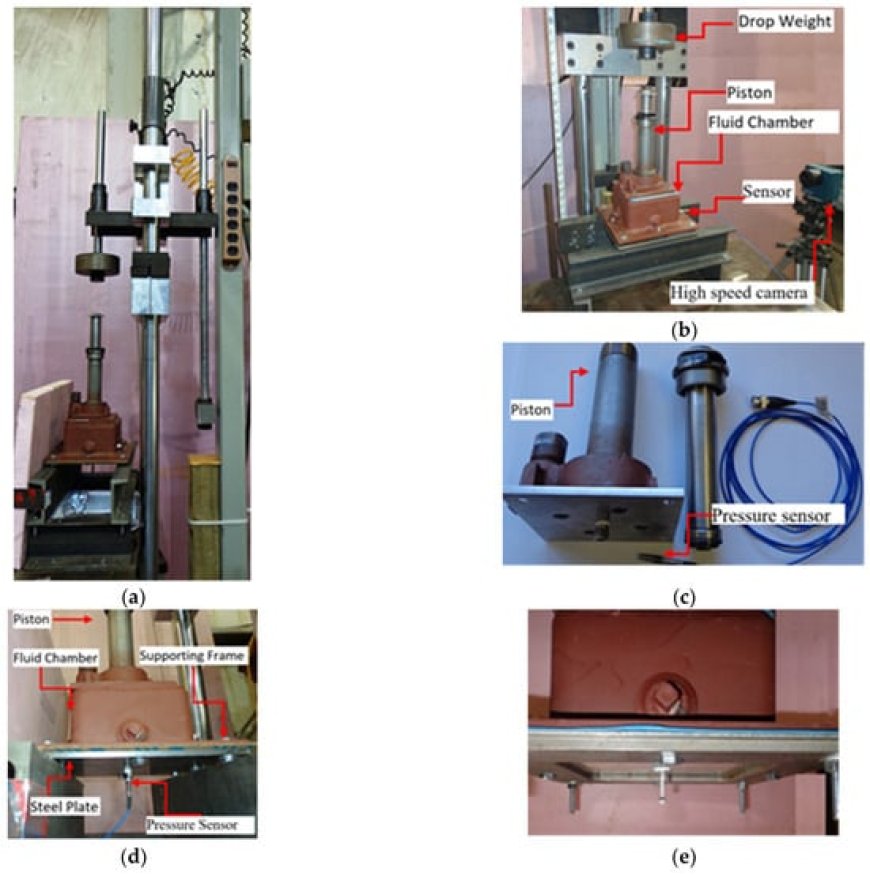
The study of blast loads on structures is important due to the potential of significant consequences in various scenarios. From terrorist attacks to industrial accidents, comprehending how structures respond to blast waves is critical for ensuring public safety and designing resilient structures. Studying these effects typically involves two main methods: free-field tests with live explosives and shock tube tests. Although shock tube testing offers certain advantages, both approaches are costly and demand significant space. This research aims to develop a cost-effective and straightforward technique for generating stress waves that closely replicate the progressive and spatial characteristics of free-field or shock tube blast waves. This method was designed to evaluate the dynamic response of laminated glass panels. The stress wave was generated by impacting a piston on the fluid inside a tube, which was connected to a fluid chamber. This setup produced impulsive loads that were distributed across a laminated glass test panel. Moreover, it was used to simulate the shock near filed explosions for a certain part of a structure. High-speed cameras were utilized to analyze the initial velocity of flying glass fragments. The apparatus successfully produced various blast waves and impulsive profiles for different drop weight heights. The initial velocities of randomly selected flying shards ranged from 3 m/s to 4 m/s.
CivilEng, Vol. 5, Pages 576-590: Blast Wave Simulator for Laminated Glass Panels Experimental Evaluation
CivilEng doi: 10.3390/civileng5030031
Authors: Mahmoud T. Nawar Ayman El-Zohairy Alaa El-Sisi Hani Salim Abdelhakim A. Aldoshan
The study of blast loads on structures is important due to the potential of significant consequences in various scenarios. From terrorist attacks to industrial accidents, comprehending how structures respond to blast waves is critical for ensuring public safety and designing resilient structures. Studying these effects typically involves two main methods: free-field tests with live explosives and shock tube tests. Although shock tube testing offers certain advantages, both approaches are costly and demand significant space. This research aims to develop a cost-effective and straightforward technique for generating stress waves that closely replicate the progressive and spatial characteristics of free-field or shock tube blast waves. This method was designed to evaluate the dynamic response of laminated glass panels. The stress wave was generated by impacting a piston on the fluid inside a tube, which was connected to a fluid chamber. This setup produced impulsive loads that were distributed across a laminated glass test panel. Moreover, it was used to simulate the shock near filed explosions for a certain part of a structure. High-speed cameras were utilized to analyze the initial velocity of flying glass fragments. The apparatus successfully produced various blast waves and impulsive profiles for different drop weight heights. The initial velocities of randomly selected flying shards ranged from 3 m/s to 4 m/s.
What's Your Reaction?