Climate, Vol. 12, Pages 60: Conceptualising the Link between Citizen Science and Climate Governance: A Systematic Review
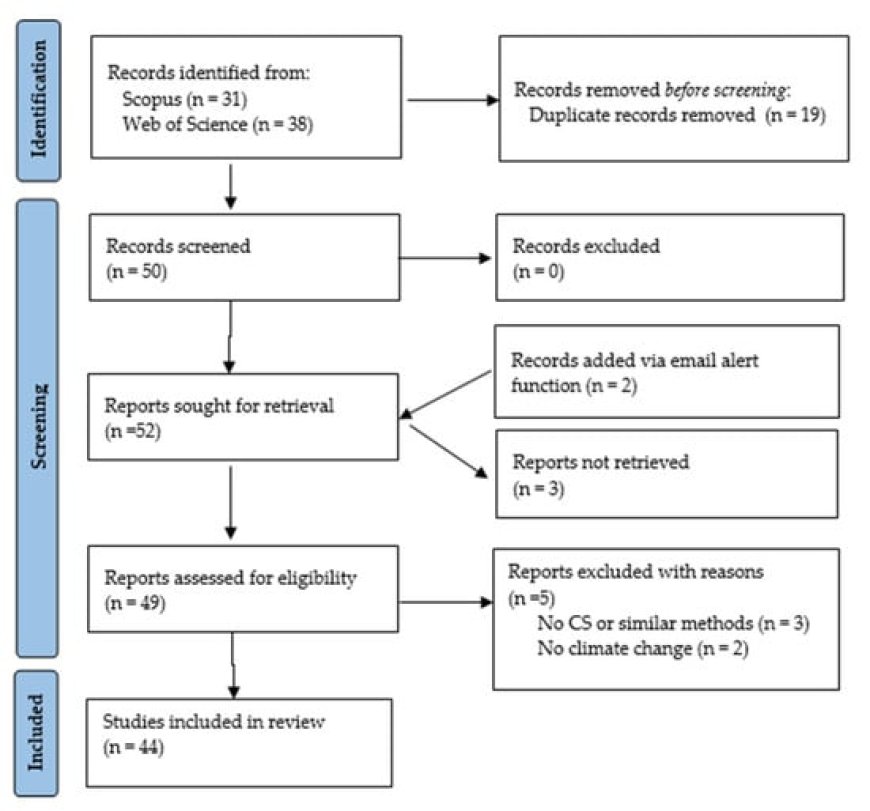
Multilevel and decentralised governance approaches involving different social actors are increasingly relevant to collectively tackling climate-induced vulnerabilities. Among emergent governance experimentations, citizen science (CS) is a transversal scientific practice characterised by the involvement of citizens in various phases of the scientific process. We performed a PRISMA systematic review of the scientific literature in order to conceptualise the interface between CS and climate governance. The included 44 studies were coded following the thematic analysis method. Information about temporal and geographical distribution, main research designs and methods, climate governance domains and levels of analysis was extracted. Among the most significant results, we stress the existence of a two-way link between CS and climate governance: CS beyond data gathering can facilitate climate change adaptation—namely, counteracting disaster risk, food insecurity and mental health distress due to changing climate, promoting health and wellbeing, and environmental conservation—until systemic changes are made. Conversely, inclusive governance structures and processes may provide support to initiate CS projects. We also discuss the role of psychosocial and justice issues—as well as digital CS—throughout the selected literature, and the implications for future lines of research and policy.
Climate, Vol. 12, Pages 60: Conceptualising the Link between Citizen Science and Climate Governance: A Systematic Review
Climate doi: 10.3390/cli12050060
Authors: Gloria Freschi Marialuisa Menegatto Adriano Zamperini
Multilevel and decentralised governance approaches involving different social actors are increasingly relevant to collectively tackling climate-induced vulnerabilities. Among emergent governance experimentations, citizen science (CS) is a transversal scientific practice characterised by the involvement of citizens in various phases of the scientific process. We performed a PRISMA systematic review of the scientific literature in order to conceptualise the interface between CS and climate governance. The included 44 studies were coded following the thematic analysis method. Information about temporal and geographical distribution, main research designs and methods, climate governance domains and levels of analysis was extracted. Among the most significant results, we stress the existence of a two-way link between CS and climate governance: CS beyond data gathering can facilitate climate change adaptation—namely, counteracting disaster risk, food insecurity and mental health distress due to changing climate, promoting health and wellbeing, and environmental conservation—until systemic changes are made. Conversely, inclusive governance structures and processes may provide support to initiate CS projects. We also discuss the role of psychosocial and justice issues—as well as digital CS—throughout the selected literature, and the implications for future lines of research and policy.
What's Your Reaction?