














Buildings, Vol. 14, Pages 1198: Prediction of the Properties of Vibro-Centrifuged Variatropic Concrete in Aggressive Environments Using Machine Learning Methods
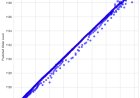
In recent years, one of the most promising areas in modern concrete science and the technology of reinforced concrete structures is the technology of vibro-centrifugation of concrete, which makes it possible to obtain reinforced concrete elements with a variatropic structure. However, this area is poorly studied and there is a serious deficiency in both scientific and practical terms, expressed in the absence of a systematic knowledge of the life cycle management processes of vibro-centrifuged variatropic concrete. Artificial intelligence methods are seen as one of the most promising methods for improving the process of managing the life cycle of such concrete in reinforced concrete structures. The purpose of the study is to develop and compare machine learning algorithms based on ridge regression, decision tree and extreme gradient boosting (XGBoost) for predicting the compressive strength of vibro-centrifuged variatropic concrete using a database of experimental values obtained under laboratory conditions. As a result of laboratory tests, a dataset of 664 samples was generated, describing the influence of aggressive environmental factors (freezing–thawing, chloride content, sulfate content and number of wetting–drying cycles) on the final strength characteristics of concrete. The use of analytical techniques to extract additional knowledge from data contributed to improving the resulting predictive properties of machine learning models. As a result, the average absolute percentage error (MAPE) for the best XGBoost algorithm was 2.72%, mean absolute error (MAE) = 1.134627, mean squared error (MSE) = 4.801390, root-mean-square error (RMSE) = 2.191208 and R2 = 0.93, which allows to conclude that it is possible to use “smart” algorithms to improve the life cycle management process of vibro-centrifuged variatropic concrete, by reducing the time required for the compressive strength assessment of new structures.

Buildings, Vol. 14, Pages 1198: Prediction of the Properties of Vibro-Centrifuged Variatropic Concrete in Aggressive Environments Using Machine Learning Methods
Buildings doi: 10.3390/buildings14051198
Authors: Alexey N. Beskopylny Sergey A. Stel’makh Evgenii M. Shcherban’ Irina Razveeva Alexey Kozhakin Anton Pembek Tatiana N. Kondratieva Diana Elshaeva Andrei Chernil’nik Nikita Beskopylny
In recent years, one of the most promising areas in modern concrete science and the technology of reinforced concrete structures is the technology of vibro-centrifugation of concrete, which makes it possible to obtain reinforced concrete elements with a variatropic structure. However, this area is poorly studied and there is a serious deficiency in both scientific and practical terms, expressed in the absence of a systematic knowledge of the life cycle management processes of vibro-centrifuged variatropic concrete. Artificial intelligence methods are seen as one of the most promising methods for improving the process of managing the life cycle of such concrete in reinforced concrete structures. The purpose of the study is to develop and compare machine learning algorithms based on ridge regression, decision tree and extreme gradient boosting (XGBoost) for predicting the compressive strength of vibro-centrifuged variatropic concrete using a database of experimental values obtained under laboratory conditions. As a result of laboratory tests, a dataset of 664 samples was generated, describing the influence of aggressive environmental factors (freezing–thawing, chloride content, sulfate content and number of wetting–drying cycles) on the final strength characteristics of concrete. The use of analytical techniques to extract additional knowledge from data contributed to improving the resulting predictive properties of machine learning models. As a result, the average absolute percentage error (MAPE) for the best XGBoost algorithm was 2.72%, mean absolute error (MAE) = 1.134627, mean squared error (MSE) = 4.801390, root-mean-square error (RMSE) = 2.191208 and R2 = 0.93, which allows to conclude that it is possible to use “smart” algorithms to improve the life cycle management process of vibro-centrifuged variatropic concrete, by reducing the time required for the compressive strength assessment of new structures.
What's Your Reaction?