AI, Vol. 4, Pages 996-1009: Enhancing Tuta absoluta Detection on Tomato Plants: Ensemble Techniques and Deep Learning
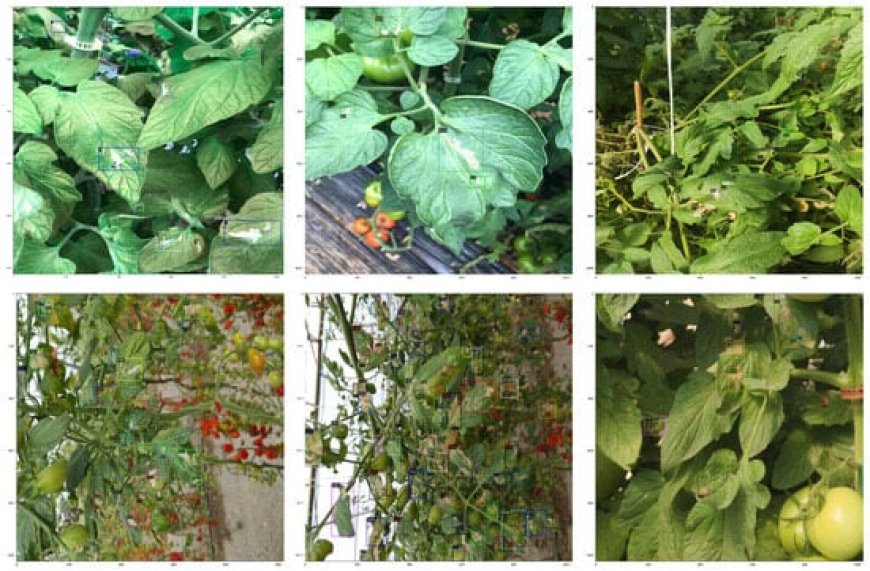
Early detection and efficient management practices to control Tuta absoluta (Meyrick) infestation is crucial for safeguarding tomato production yield and minimizing economic losses. This study investigates the detection of T. absoluta infestation on tomato plants using object detection models combined with ensemble techniques. Additionally, this study highlights the importance of utilizing a dataset captured in real settings in open-field and greenhouse environments to address the complexity of real-life challenges in object detection of plant health scenarios. The effectiveness of deep-learning-based models, including Faster R-CNN and RetinaNet, was evaluated in terms of detecting T. absoluta damage. The initial model evaluations revealed diminishing performance levels across various model configurations, including different backbones and heads. To enhance detection predictions and improve mean Average Precision (mAP) scores, ensemble techniques were applied such as Non-Maximum Suppression (NMS), Soft Non-Maximum Suppression (Soft NMS), Non-Maximum Weighted (NMW), and Weighted Boxes Fusion (WBF). The outcomes shown that the WBF technique significantly improved the mAP scores, resulting in a 20% improvement from 0.58 (max mAP from individual models) to 0.70. The results of this study contribute to the field of agricultural pest detection by emphasizing the potential of deep learning and ensemble techniques in improving the accuracy and reliability of object detection models.
AI, Vol. 4, Pages 996-1009: Enhancing Tuta absoluta Detection on Tomato Plants: Ensemble Techniques and Deep Learning
Authors: Nikolaos Giakoumoglou Eleftheria-Maria Pechlivani Nikolaos Frangakis Dimitrios Tzovaras
Early detection and efficient management practices to control Tuta absoluta (Meyrick) infestation is crucial for safeguarding tomato production yield and minimizing economic losses. This study investigates the detection of T. absoluta infestation on tomato plants using object detection models combined with ensemble techniques. Additionally, this study highlights the importance of utilizing a dataset captured in real settings in open-field and greenhouse environments to address the complexity of real-life challenges in object detection of plant health scenarios. The effectiveness of deep-learning-based models, including Faster R-CNN and RetinaNet, was evaluated in terms of detecting T. absoluta damage. The initial model evaluations revealed diminishing performance levels across various model configurations, including different backbones and heads. To enhance detection predictions and improve mean Average Precision (mAP) scores, ensemble techniques were applied such as Non-Maximum Suppression (NMS), Soft Non-Maximum Suppression (Soft NMS), Non-Maximum Weighted (NMW), and Weighted Boxes Fusion (WBF). The outcomes shown that the WBF technique significantly improved the mAP scores, resulting in a 20% improvement from 0.58 (max mAP from individual models) to 0.70. The results of this study contribute to the field of agricultural pest detection by emphasizing the potential of deep learning and ensemble techniques in improving the accuracy and reliability of object detection models.
What's Your Reaction?