AI, Vol. 4, Pages 551-573: Improving Alzheimer’s Disease and Brain Tumor Detection Using Deep Learning with Particle Swarm Optimization
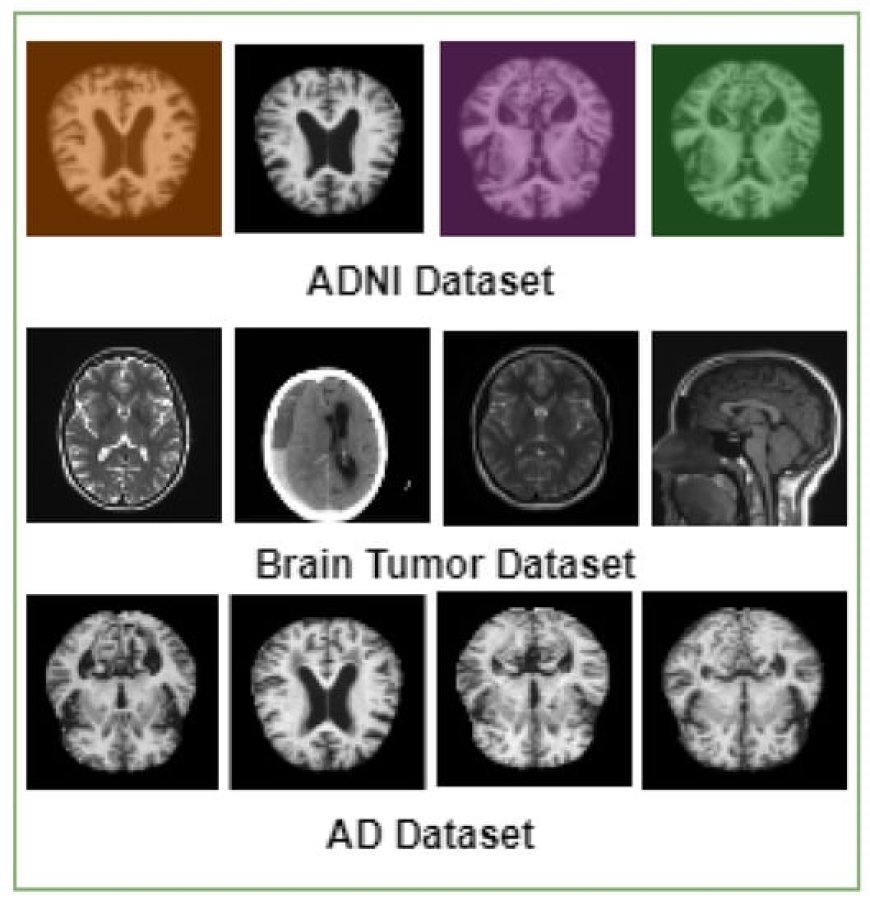
Convolutional Neural Networks (CNNs) have exhibited remarkable potential in effectively tackling the intricate task of classifying MRI images, specifically in Alzheimer’s disease detection and brain tumor identification. While CNNs optimize their parameters automatically through training processes, finding the optimal values for these parameters can still be a challenging task due to the complexity of the search space and the potential for suboptimal results. Consequently, researchers often encounter difficulties determining the ideal parameter settings for CNNs. This challenge necessitates using trial-and-error methods or expert judgment, as the search for the best combination of parameters involves exploring a vast space of possibilities. Despite the automatic optimization during training, the process does not guarantee finding the globally-optimal parameter values. Hence, researchers often rely on iterative experimentation and expert knowledge to fine-tune these parameters and maximize CNN performance. This poses a significant obstacle in developing real-world applications that leverage CNNs for MRI image analysis. This paper presents a new hybrid model that combines the Particle Swarm Optimization (PSO) algorithm with CNNs to enhance detection and classification capabilities. Our method utilizes the PSO algorithm to determine the optimal configuration of CNN hyper-parameters. Subsequently, these optimized parameters are applied to the CNN architectures for classification. As a result, our hybrid model exhibits improved prediction accuracy for brain diseases while reducing the loss of function value. To evaluate the performance of our proposed model, we conducted experiments using three benchmark datasets. Two datasets were utilized for Alzheimer’s disease: the Alzheimer’s Disease Neuroimaging Initiative (ADNI) and an international dataset from Kaggle. The third dataset focused on brain tumors. The experimental assessment demonstrated the superiority of our proposed model, achieving unprecedented accuracy rates of 98.50%, 98.83%, and 97.12% for the datasets mentioned earlier, respectively.
AI, Vol. 4, Pages 551-573: Improving Alzheimer’s Disease and Brain Tumor Detection Using Deep Learning with Particle Swarm Optimization
Authors: Rahmeh Ibrahim Rawan Ghnemat Qasem Abu Al-Haija
Convolutional Neural Networks (CNNs) have exhibited remarkable potential in effectively tackling the intricate task of classifying MRI images, specifically in Alzheimer’s disease detection and brain tumor identification. While CNNs optimize their parameters automatically through training processes, finding the optimal values for these parameters can still be a challenging task due to the complexity of the search space and the potential for suboptimal results. Consequently, researchers often encounter difficulties determining the ideal parameter settings for CNNs. This challenge necessitates using trial-and-error methods or expert judgment, as the search for the best combination of parameters involves exploring a vast space of possibilities. Despite the automatic optimization during training, the process does not guarantee finding the globally-optimal parameter values. Hence, researchers often rely on iterative experimentation and expert knowledge to fine-tune these parameters and maximize CNN performance. This poses a significant obstacle in developing real-world applications that leverage CNNs for MRI image analysis. This paper presents a new hybrid model that combines the Particle Swarm Optimization (PSO) algorithm with CNNs to enhance detection and classification capabilities. Our method utilizes the PSO algorithm to determine the optimal configuration of CNN hyper-parameters. Subsequently, these optimized parameters are applied to the CNN architectures for classification. As a result, our hybrid model exhibits improved prediction accuracy for brain diseases while reducing the loss of function value. To evaluate the performance of our proposed model, we conducted experiments using three benchmark datasets. Two datasets were utilized for Alzheimer’s disease: the Alzheimer’s Disease Neuroimaging Initiative (ADNI) and an international dataset from Kaggle. The third dataset focused on brain tumors. The experimental assessment demonstrated the superiority of our proposed model, achieving unprecedented accuracy rates of 98.50%, 98.83%, and 97.12% for the datasets mentioned earlier, respectively.
What's Your Reaction?