Water, Vol. 16, Pages 1229: Effects of Bio-Organic Fertilizers Substitution on Gaseous Nitrogen Losses in Rice Fields
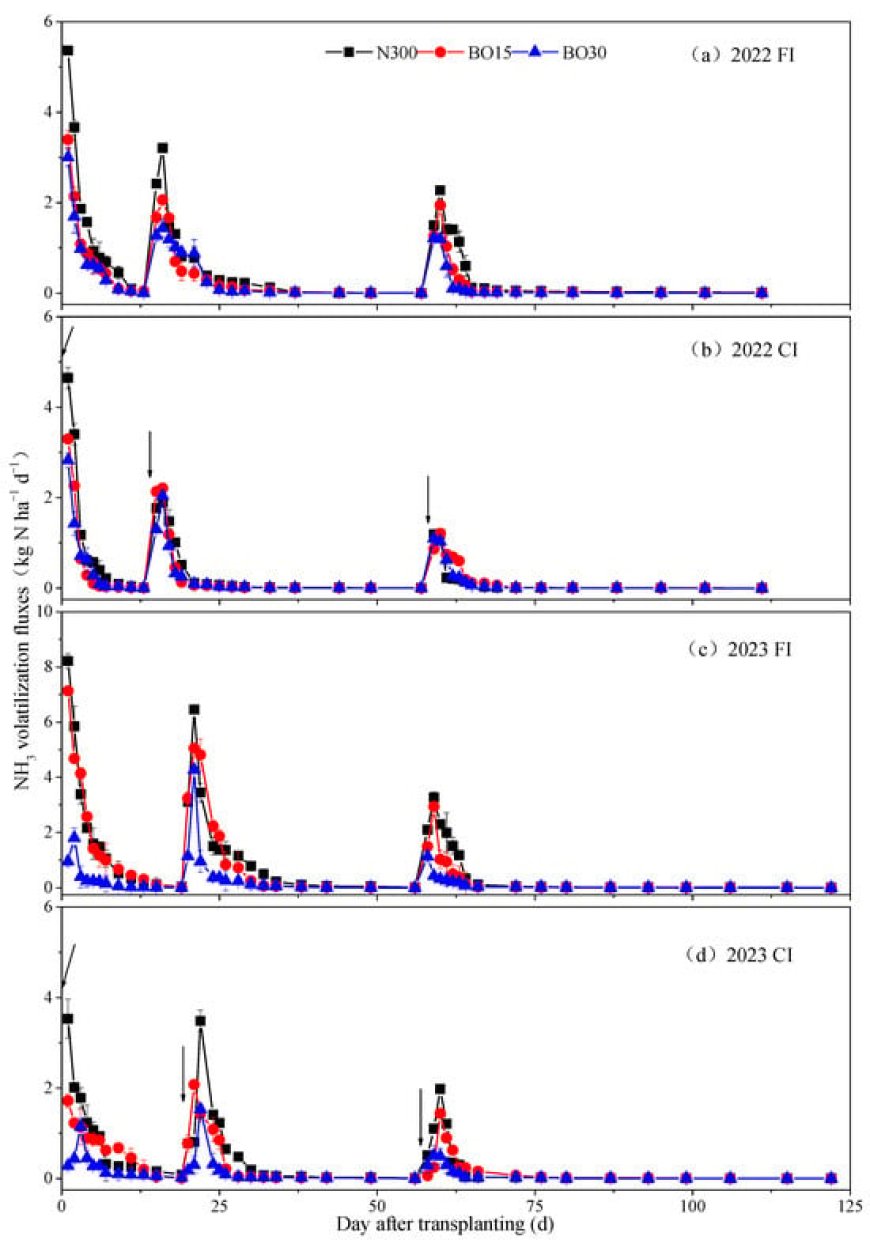
Traditional practices for managing irrigation and fertilizer in Chinese rice fields have historically consumed large amounts of water resources and caused serious gaseous nitrogen losses (ammonia volatilization and N2O), resulting in low water and fertilizer use efficiency. While both water-saving irrigation and substituting organic fertilizer for chemical fertilizer can impact ammonia volatilization and N2O emissions, the impact of their combined application on gaseous nitrogen loss in rice fields remains unclear. To achieve this goal, we conducted a two-year experiment using two irrigation methods and three bio-organic fertilizer substitution modes. The experiment investigated the effect of different irrigation and fertilizer management techniques on gaseous nitrogen losses in rice fields. The result indicated that controlled irrigation could reduce the peak value of ammonia volatilization by 36.8~75.9% and ammonia volatilization accumulation by 45.8%. However, it also leads to a 71.4% increase in N2O accumulation emissions, resulting in a 43.0% reduction in gaseous nitrogen losses. Compared to full chemical fertilizers, bio-organic fertilizer substitution could effectively reduce the peak of N2O and ammonia volatilization. Cumulative ammonia volatilization and N2O emissions went down by 22.7~60.0% and 38.6~42.6%, respectively. This then led to a 23.4~52.9% drop in total gaseous nitrogen losses. In contrast, the utilization of controlled irrigation and bio-organic fertilizer substitution did not have a significant impact on rice yield. However, it did reduce the intensity of gaseous nitrogen loss from rice fields by 42.7% and 22.5% to 56.5%, respectively. When taken together, the substitution of bio-organic fertilizer in controlled irrigation can effectively reduce gaseous nitrogen losses while maintaining rice yields. This study has significant practical implications for reducing nitrogen loss from paddy fields, improving water and fertilizer utilization, and achieving sustainable agricultural development.
Water, Vol. 16, Pages 1229: Effects of Bio-Organic Fertilizers Substitution on Gaseous Nitrogen Losses in Rice Fields
Water doi: 10.3390/w16091229
Authors: Zhengdi Han Huijing Hou Xianzi Yao Xiang Qian Qin Tao Mingyao Zhou
Traditional practices for managing irrigation and fertilizer in Chinese rice fields have historically consumed large amounts of water resources and caused serious gaseous nitrogen losses (ammonia volatilization and N2O), resulting in low water and fertilizer use efficiency. While both water-saving irrigation and substituting organic fertilizer for chemical fertilizer can impact ammonia volatilization and N2O emissions, the impact of their combined application on gaseous nitrogen loss in rice fields remains unclear. To achieve this goal, we conducted a two-year experiment using two irrigation methods and three bio-organic fertilizer substitution modes. The experiment investigated the effect of different irrigation and fertilizer management techniques on gaseous nitrogen losses in rice fields. The result indicated that controlled irrigation could reduce the peak value of ammonia volatilization by 36.8~75.9% and ammonia volatilization accumulation by 45.8%. However, it also leads to a 71.4% increase in N2O accumulation emissions, resulting in a 43.0% reduction in gaseous nitrogen losses. Compared to full chemical fertilizers, bio-organic fertilizer substitution could effectively reduce the peak of N2O and ammonia volatilization. Cumulative ammonia volatilization and N2O emissions went down by 22.7~60.0% and 38.6~42.6%, respectively. This then led to a 23.4~52.9% drop in total gaseous nitrogen losses. In contrast, the utilization of controlled irrigation and bio-organic fertilizer substitution did not have a significant impact on rice yield. However, it did reduce the intensity of gaseous nitrogen loss from rice fields by 42.7% and 22.5% to 56.5%, respectively. When taken together, the substitution of bio-organic fertilizer in controlled irrigation can effectively reduce gaseous nitrogen losses while maintaining rice yields. This study has significant practical implications for reducing nitrogen loss from paddy fields, improving water and fertilizer utilization, and achieving sustainable agricultural development.
What's Your Reaction?