Water, Vol. 16, Pages 1155: Temporal Changes in Water and Sediment Discharges: Impacts of Climate Change and Human Activities in the Red River Basin (1958–2021) with Projections up to 2100
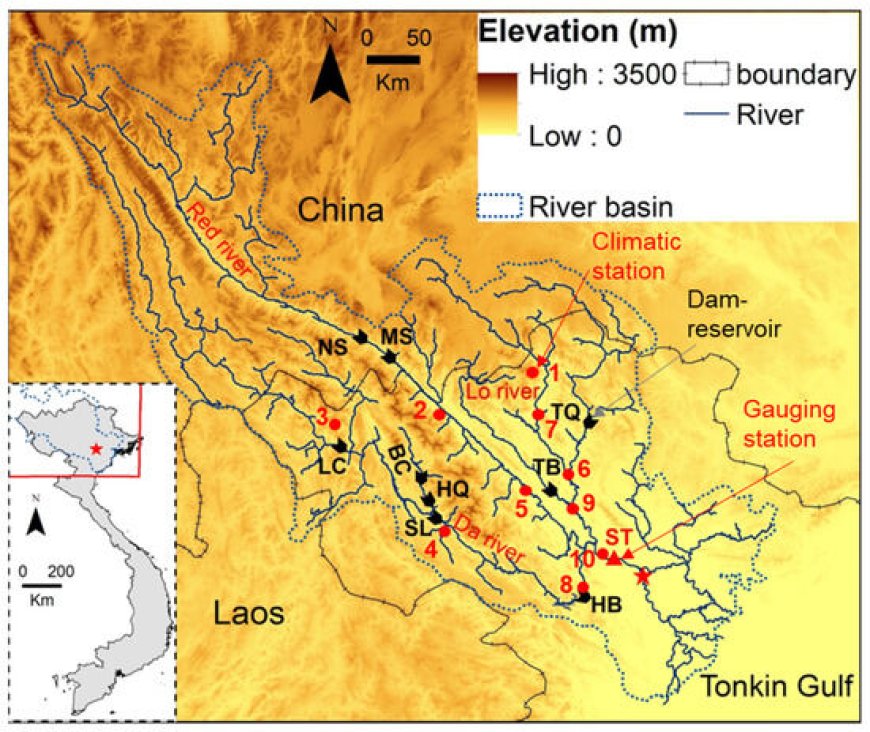
The present study examined temporal variations in water and sediment discharges in the Red River basin from 1958 to 2021 resulting from climate change and anthropogenic factors, with projections extended to 2100. The 64-year observational period was divided into five distinct stages: 1958–1971 (Stage I: natural conditions); 1972–1988 (Stage II: onset of human activities); 1989–2010 (Stage III: post Hoa Binh dam construction); 2011–2016 (Stage IV: series of new dam constructions); and 2017–2021 (Stage V: combined effects of human activities and climate change). Attribution analysis revealed that human activities accounted for 62% and 92% of the dramatic declines in sediment loads in Stages III and IV, respectively. Projection results of fluvial sediment loads over an approximate 150-year timeframe (1958–2100) indicate an overriding impact from human activities. Climate change projections based on four scenarios (−5%, +5%, +10%, and +15% change per year) suggest associated decreases or increases in river flows. This study predicts that projected 21st century increases in river flow attributable to climate change will offset up to eight percent of the human-induced sediment load deficit.
Water, Vol. 16, Pages 1155: Temporal Changes in Water and Sediment Discharges: Impacts of Climate Change and Human Activities in the Red River Basin (1958–2021) with Projections up to 2100
Water doi: 10.3390/w16081155
Authors: Quang Hao Nguyen Vinh Ngoc Tran
The present study examined temporal variations in water and sediment discharges in the Red River basin from 1958 to 2021 resulting from climate change and anthropogenic factors, with projections extended to 2100. The 64-year observational period was divided into five distinct stages: 1958–1971 (Stage I: natural conditions); 1972–1988 (Stage II: onset of human activities); 1989–2010 (Stage III: post Hoa Binh dam construction); 2011–2016 (Stage IV: series of new dam constructions); and 2017–2021 (Stage V: combined effects of human activities and climate change). Attribution analysis revealed that human activities accounted for 62% and 92% of the dramatic declines in sediment loads in Stages III and IV, respectively. Projection results of fluvial sediment loads over an approximate 150-year timeframe (1958–2100) indicate an overriding impact from human activities. Climate change projections based on four scenarios (−5%, +5%, +10%, and +15% change per year) suggest associated decreases or increases in river flows. This study predicts that projected 21st century increases in river flow attributable to climate change will offset up to eight percent of the human-induced sediment load deficit.
What's Your Reaction?