Water, Vol. 16, Pages 1130: Diversity of Macrophytes and Macroinvertebrates in Different Types of Standing Waters in the Drava Field
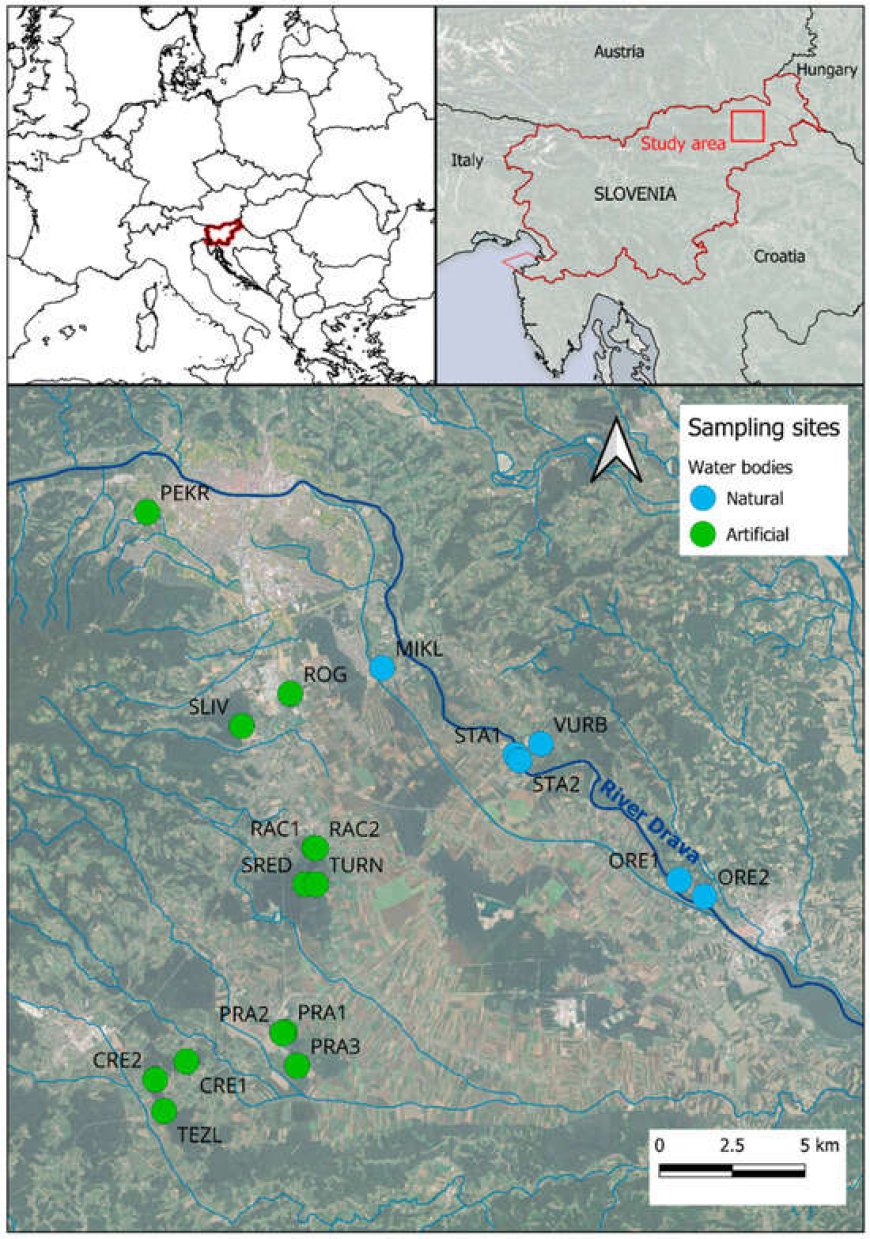
The diversity of macrophytes and macroinvertebrates in small standing waters of different origins and characteristics was investigated. This survey covered 19 ponds in the Drava field in northeastern Slovenia. The influence of the macrophytes on the macroinvertebrates was investigated and the main environmental factors that had the most significant influence on the composition of the two communities were identified. Sixty-seven taxa of macrophytes and seventy-three families of macroinvertebrates were identified. We found that a diverse macrophyte community has a positive effect on the macroinvertebrate community. In contrast, the dominance of a single macrophyte species has a strong negative influence on the richness of the macroinvertebrate community. The taxonomic richness and abundance of the macroinvertebrate community in the natural ponds was statistically significantly higher than that in artificial ponds. The significant differences in the environmental characteristics between the natural and artificial ponds, such as the macrophyte cover, conductivity, and riparian zone width, may account for these differences. Our study suggests that a greater diversity of macrophyte and macroinvertebrate communities in natural ponds is enabled by abundant but diverse macrophyte cover, low phosphorus content, and wide riparian zones, which require appropriate management of ponds and their catchments.
Water, Vol. 16, Pages 1130: Diversity of Macrophytes and Macroinvertebrates in Different Types of Standing Waters in the Drava Field
Water doi: 10.3390/w16081130
Authors: Mateja Germ Žiga Tertinek Igor Zelnik
The diversity of macrophytes and macroinvertebrates in small standing waters of different origins and characteristics was investigated. This survey covered 19 ponds in the Drava field in northeastern Slovenia. The influence of the macrophytes on the macroinvertebrates was investigated and the main environmental factors that had the most significant influence on the composition of the two communities were identified. Sixty-seven taxa of macrophytes and seventy-three families of macroinvertebrates were identified. We found that a diverse macrophyte community has a positive effect on the macroinvertebrate community. In contrast, the dominance of a single macrophyte species has a strong negative influence on the richness of the macroinvertebrate community. The taxonomic richness and abundance of the macroinvertebrate community in the natural ponds was statistically significantly higher than that in artificial ponds. The significant differences in the environmental characteristics between the natural and artificial ponds, such as the macrophyte cover, conductivity, and riparian zone width, may account for these differences. Our study suggests that a greater diversity of macrophyte and macroinvertebrate communities in natural ponds is enabled by abundant but diverse macrophyte cover, low phosphorus content, and wide riparian zones, which require appropriate management of ponds and their catchments.
What's Your Reaction?