Singularities in Physics
In the realm of physics, the concept of a singularity is both fascinating and mysterious. Singularities represent points where our current understanding of the laws of physics breaks down. Let's explore what singularities are, where they occur, and their significance in both cosmology and general relativity.

1. Gravitational Singularities in General Relativity
Black Holes
A black hole is perhaps the most well-known type of singularity. Formed when a massive star collapses under its own gravity, a black hole features an event horizon beyond which nothing, not even light, can escape. At the center of a black hole lies the singularity, a point where the density becomes infinite and space-time curvature is infinitely steep.

2. Big Bang Singularity
The Big Bang singularity refers to the beginning of the universe when all matter and energy were condensed into an infinitely small and dense point. This moment marked the start of the expansion of the universe, leading to the cosmos we observe today.

3. Cosmological Singularities
Beyond the Big Bang, cosmological singularities also include theoretical scenarios like the Big Crunch. If the universe were to stop expanding and begin contracting, it could collapse back into an infinitely dense state, similar to a reverse Big Bang
4. Properties and Challenges
Infinite Density and Curvature
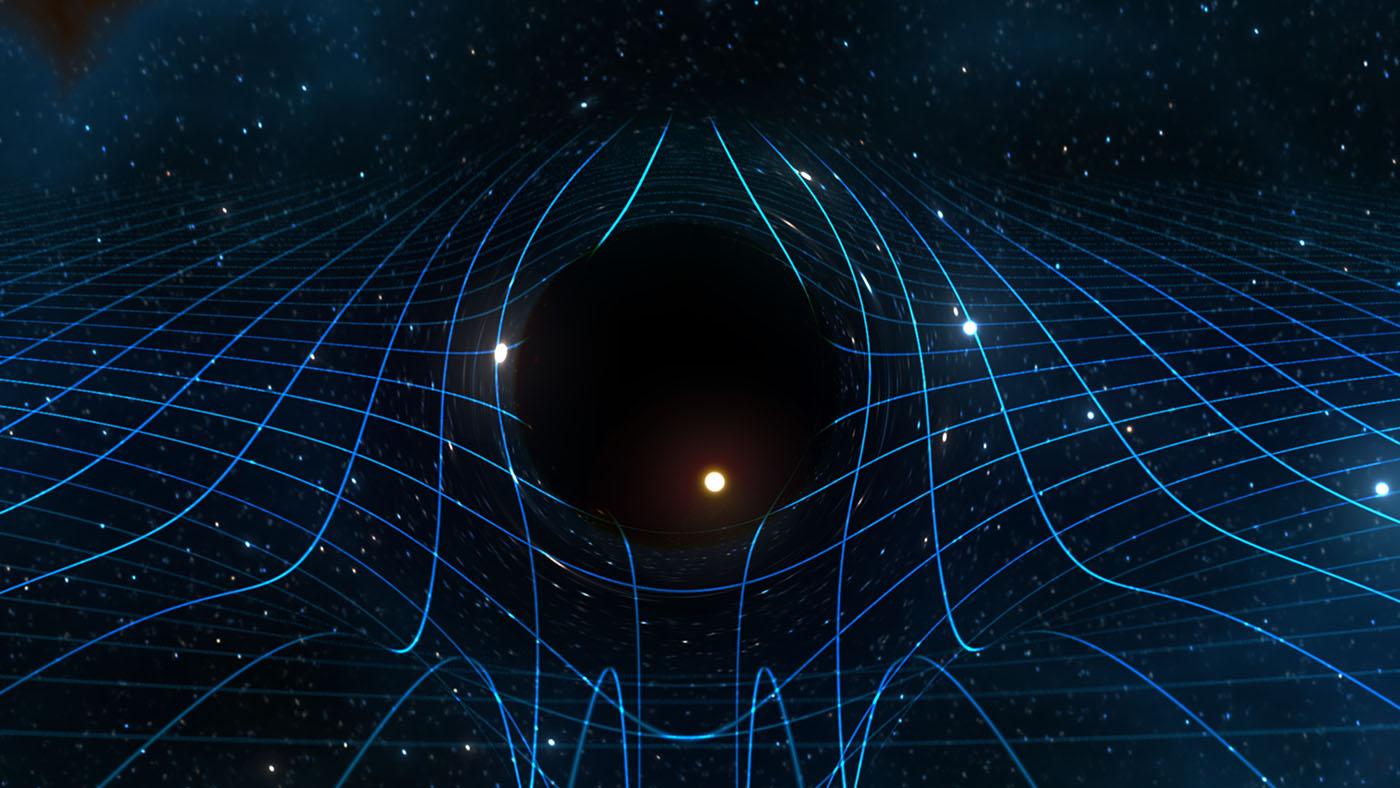
At a singularity, densities become infinitely large and the curvature of space-time becomes infinitely steep. This represents a breakdown of the laws of physics, particularly general relativity, which cannot describe these conditions.
5. Event Horizon
The event horizon of a black hole is the boundary beyond which nothing can escape. Inside this boundary lies the singularity. The event horizon marks the point at which escape velocity exceeds the speed of light.
6. Theoretical Implications
Quantum Gravity
Understanding singularities requires a theory of quantum gravity that unifies general relativity with quantum mechanics. Theoretical frameworks like string theory and loop quantum gravity are attempts to describe the fundamental structure of the universe at these extreme scales.

7. Hawking Radiation
Proposed by Stephen Hawking, Hawking radiation suggests that black holes can emit radiation due to quantum effects near the event horizon. This radiation could lead to the gradual evaporation of black holes over time.

Experimental Observations and Future Research
Currently, singularities are primarily theoretical constructs, as direct observation is impossible. However, the study of black holes through indirect means, such as gravitational wave detections and observations of the event horizon via the Event Horizon Telescope, provides critical insights into the nature of these extreme environments.
Future research in singularities involves:
- Advanced Observations: Improved astronomical observations and data from gravitational wave detectors will enhance our understanding of black holes and the conditions near singularities.
- Developing Quantum Gravity: Progress in quantum gravity theories may offer a consistent description of spacetime that eliminates singularities.
- Computer Simulations: Numerical relativity and advanced simulations can help visualize the behavior of spacetime near singularities and test various theoretical predictions.
Singularities remain one of the most profound mysteries in modern physics, challenging our understanding of the universe and pointing toward the need for new physics beyond our current theories.
What's Your Reaction?