IJERPH, Vol. 21, Pages 517: The Association between Body Mass Index and Glycohemoglobin (HbA1c) in the US Population’s Diabetes Status
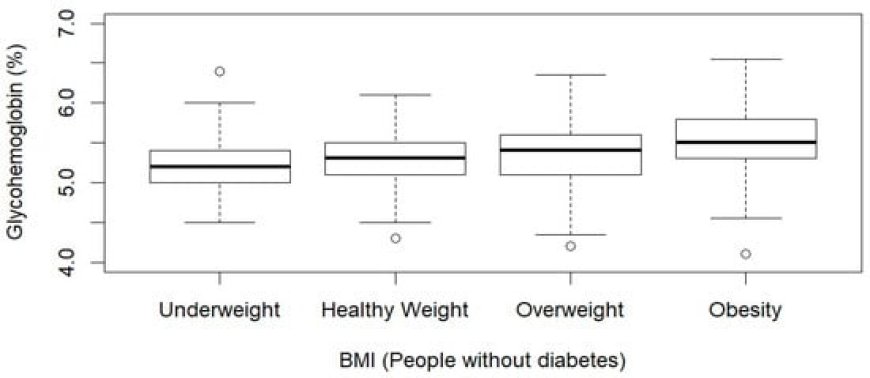
Obesity, indicated by Body Mass Index (BMI), is a risk factor for type 2 diabetes. However, its association with glycated hemoglobin (HbA1c), a crucial indicator of blood-sugar control, may vary across different populations and disease statuses. Data from the National Health and Nutrition Examination Survey (NHANES) 2017–2018 were analyzed. Participants aged 18–79 years with complete information on BMI, diabetes status, and HbA1c were included (n = 4003). Linear regression models were used to assess the association between BMI and HbA1c, adjusting for demographic confounders, smoking status, alcohol consumption, and healthcare access. Among participants without diabetes, BMI was positively associated with HbA1c levels (coefficient: 0.015, 95% CI: 0.01, 0.02; p-value < 0.05), after adjusting for potential confounders. However, this association was not significant among those with diabetes (coefficient: −0.005, 95% CI: −0.05, 0.04; p-value > 0.1). Our findings suggest a differential relationship between BMI and HbA1c in individuals with and without diabetes. While BMI remains a significant predictor of HbA1c in non-diabetic individuals, its significance diminishes in those with diabetes.
IJERPH, Vol. 21, Pages 517: The Association between Body Mass Index and Glycohemoglobin (HbA1c) in the US Population’s Diabetes Status
International Journal of Environmental Research and Public Health doi: 10.3390/ijerph21050517
Authors: Wenxue Lin
Obesity, indicated by Body Mass Index (BMI), is a risk factor for type 2 diabetes. However, its association with glycated hemoglobin (HbA1c), a crucial indicator of blood-sugar control, may vary across different populations and disease statuses. Data from the National Health and Nutrition Examination Survey (NHANES) 2017–2018 were analyzed. Participants aged 18–79 years with complete information on BMI, diabetes status, and HbA1c were included (n = 4003). Linear regression models were used to assess the association between BMI and HbA1c, adjusting for demographic confounders, smoking status, alcohol consumption, and healthcare access. Among participants without diabetes, BMI was positively associated with HbA1c levels (coefficient: 0.015, 95% CI: 0.01, 0.02; p-value < 0.05), after adjusting for potential confounders. However, this association was not significant among those with diabetes (coefficient: −0.005, 95% CI: −0.05, 0.04; p-value > 0.1). Our findings suggest a differential relationship between BMI and HbA1c in individuals with and without diabetes. While BMI remains a significant predictor of HbA1c in non-diabetic individuals, its significance diminishes in those with diabetes.
What's Your Reaction?