IJERPH, Vol. 21, Pages 480: The Social Context of Pregnancy, Respectful Maternity Care, Biomarkers of Weathering, and Postpartum Mental Health Inequities: A Scoping Review
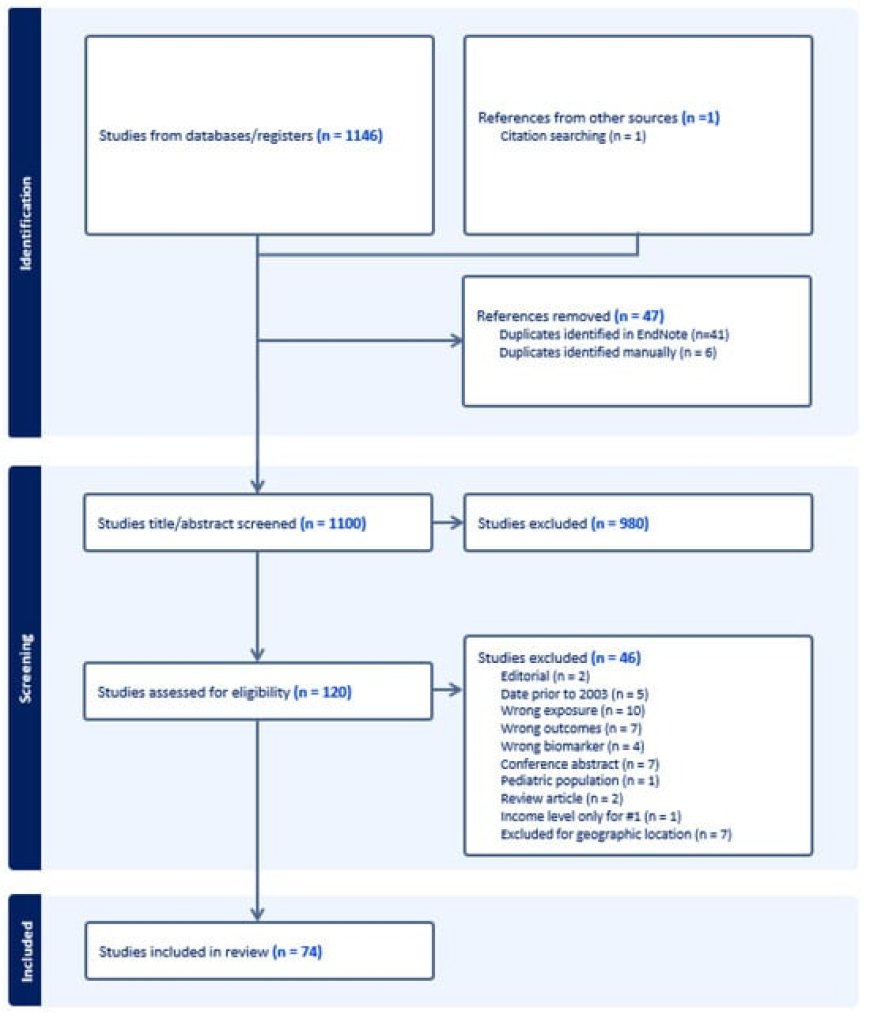
Background: Mental health disorders are the number one cause of maternal mortality and a significant maternal morbidity. This scoping review sought to understand the associations between social context and experiences during pregnancy and birth, biological indicators of stress and weathering, and perinatal mood and anxiety disorders (PMADs). Methods: A scoping review was performed using PRISMA-ScR guidance and JBI scoping review methodology. The search was conducted in OVID Medline and Embase. Results: This review identified 74 eligible English-language peer-reviewed original research articles. A majority of studies reported significant associations between social context, negative and stressful experiences in the prenatal period, and a higher incidence of diagnosis and symptoms of PMADs. Included studies reported significant associations between postpartum depression and prenatal stressors (n = 17), socioeconomic disadvantage (n = 14), negative birth experiences (n = 9), obstetric violence (n = 3), and mistreatment by maternity care providers (n = 3). Birth-related post-traumatic stress disorder (PTSD) was positively associated with negative birth experiences (n = 11), obstetric violence (n = 1), mistreatment by the maternity care team (n = 1), socioeconomic disadvantage (n = 2), and prenatal stress (n = 1); and inverse association with supportiveness of the maternity care team (n = 5) and presence of a birth companion or doula (n = 4). Postpartum anxiety was significantly associated with negative birth experiences (n = 2) and prenatal stress (n = 3). Findings related to associations between biomarkers of stress and weathering, perinatal exposures, and PMADs (n = 14) had mixed significance. Conclusions: Postpartum mental health outcomes are linked with the prenatal social context and interactions with the maternity care team during pregnancy and birth. Respectful maternity care has the potential to reduce adverse postpartum mental health outcomes, especially for persons affected by systemic oppression.
IJERPH, Vol. 21, Pages 480: The Social Context of Pregnancy, Respectful Maternity Care, Biomarkers of Weathering, and Postpartum Mental Health Inequities: A Scoping Review
International Journal of Environmental Research and Public Health doi: 10.3390/ijerph21040480
Authors: Bridget Basile-Ibrahim Joan Combellick Thomas L. Mead Alee Sorensen Janene Batten Robyn Schafer
Background: Mental health disorders are the number one cause of maternal mortality and a significant maternal morbidity. This scoping review sought to understand the associations between social context and experiences during pregnancy and birth, biological indicators of stress and weathering, and perinatal mood and anxiety disorders (PMADs). Methods: A scoping review was performed using PRISMA-ScR guidance and JBI scoping review methodology. The search was conducted in OVID Medline and Embase. Results: This review identified 74 eligible English-language peer-reviewed original research articles. A majority of studies reported significant associations between social context, negative and stressful experiences in the prenatal period, and a higher incidence of diagnosis and symptoms of PMADs. Included studies reported significant associations between postpartum depression and prenatal stressors (n = 17), socioeconomic disadvantage (n = 14), negative birth experiences (n = 9), obstetric violence (n = 3), and mistreatment by maternity care providers (n = 3). Birth-related post-traumatic stress disorder (PTSD) was positively associated with negative birth experiences (n = 11), obstetric violence (n = 1), mistreatment by the maternity care team (n = 1), socioeconomic disadvantage (n = 2), and prenatal stress (n = 1); and inverse association with supportiveness of the maternity care team (n = 5) and presence of a birth companion or doula (n = 4). Postpartum anxiety was significantly associated with negative birth experiences (n = 2) and prenatal stress (n = 3). Findings related to associations between biomarkers of stress and weathering, perinatal exposures, and PMADs (n = 14) had mixed significance. Conclusions: Postpartum mental health outcomes are linked with the prenatal social context and interactions with the maternity care team during pregnancy and birth. Respectful maternity care has the potential to reduce adverse postpartum mental health outcomes, especially for persons affected by systemic oppression.
What's Your Reaction?