Hydrology, Vol. 11, Pages 8: An Integrated Framework to Assess the Environmental and Economic Impact of Fertilizer Restrictions in a Nitrate-Contaminated Aquifer
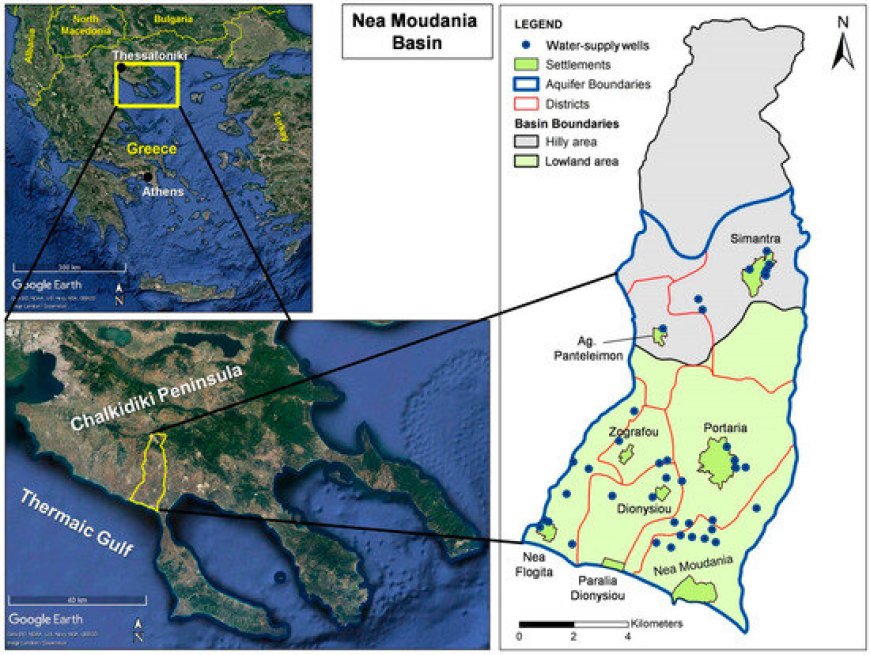
Groundwater nitrate contamination caused by the excessive use of nitrogen-based fertilizers has been widely recognized as an issue of significant concern in numerous rural areas worldwide. To mitigate nitrate contamination, corrective management practices, such as regulations on fertilizer usage, should be implemented. However, these measures often entail economic consequences that impact farmers’ income, and thus should be properly assessed. Within this context, an integrated framework combining the environmental and economic assessment of fertilization restrictions through multi-criteria decision analysis is presented in an effort to efficiently manage groundwater nitrate contamination in rural areas. For this task, various scenarios involving reductions (10%, 20%, 30%, 40% and 50%) in fertilizer application were investigated, evaluated and ranked in order to determine the most suitable option. The environmental assessment considered occurrences of nitrates in groundwater, with a specific emphasis on nitrate concentrations in water-supply wells, as obtained by a nitrate fate and transport model, while the economic analysis focused on the losses experienced by farmers due to the reduced fertilizer usage. Our case-study implementation showed that a 30% reduction in fertilization is the most appropriate option for the area being studied, highlighting the importance of adopting such an approach when confronted with conflicting outcomes among alternatives.
Hydrology, Vol. 11, Pages 8: An Integrated Framework to Assess the Environmental and Economic Impact of Fertilizer Restrictions in a Nitrate-Contaminated Aquifer
Hydrology doi: 10.3390/hydrology11010008
Authors: Ilias Siarkos Zisis Mallios Pericles Latinopoulos
Groundwater nitrate contamination caused by the excessive use of nitrogen-based fertilizers has been widely recognized as an issue of significant concern in numerous rural areas worldwide. To mitigate nitrate contamination, corrective management practices, such as regulations on fertilizer usage, should be implemented. However, these measures often entail economic consequences that impact farmers’ income, and thus should be properly assessed. Within this context, an integrated framework combining the environmental and economic assessment of fertilization restrictions through multi-criteria decision analysis is presented in an effort to efficiently manage groundwater nitrate contamination in rural areas. For this task, various scenarios involving reductions (10%, 20%, 30%, 40% and 50%) in fertilizer application were investigated, evaluated and ranked in order to determine the most suitable option. The environmental assessment considered occurrences of nitrates in groundwater, with a specific emphasis on nitrate concentrations in water-supply wells, as obtained by a nitrate fate and transport model, while the economic analysis focused on the losses experienced by farmers due to the reduced fertilizer usage. Our case-study implementation showed that a 30% reduction in fertilization is the most appropriate option for the area being studied, highlighting the importance of adopting such an approach when confronted with conflicting outcomes among alternatives.
What's Your Reaction?