Hydrology, Vol. 11, Pages 44: Development of Green Disaster Management Toolkit to Achieve Carbon Neutrality Goals in Flood Risk Management
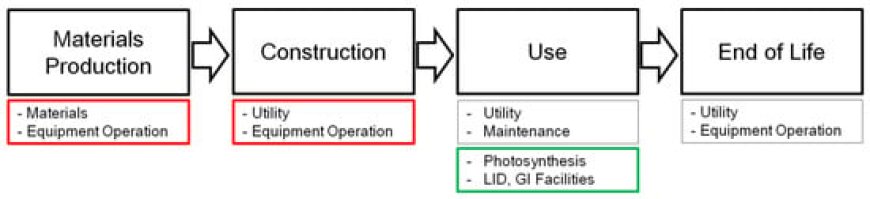
Current flood risk management projects have been criticized for their high carbon emissions, raising the need for carbon emission reduction and carbon absorption efforts to mitigate environmental impacts and achieve carbon neutrality goals. The research develops a comprehensive green disaster risk management toolkit to calculate the carbon emissions and absorption quantitatively based on the unit volume of materials and processes employed in a flood risk management project. As a result of applying the developed toolkit to a about 22,300 small stream restoration projects in Korea, the total carbon emissions were estimated to be 1,158,840.7 tons of CO2, of which 89.4% of the total carbon emissions originated from concrete-related construction activities, such as cement and ready-mixed concrete pouring. As a result of evaluating the nationwide carbon absorption results of all small stream restoration projects, total absorption by 2030 is expected to be 3.0 to 10.2 times higher than carbon emissions. The comprehensive toolkits are expected to support the selection of customized processes, materials, and methods by providing a systematic approach to calculate and minimize carbon emissions, ultimately contributing to the achievement of carbon neutrality goals in flood risk management projects.
Hydrology, Vol. 11, Pages 44: Development of Green Disaster Management Toolkit to Achieve Carbon Neutrality Goals in Flood Risk Management
Hydrology doi: 10.3390/hydrology11040044
Authors: Tae Sung Cheong Sangman Jeong
Current flood risk management projects have been criticized for their high carbon emissions, raising the need for carbon emission reduction and carbon absorption efforts to mitigate environmental impacts and achieve carbon neutrality goals. The research develops a comprehensive green disaster risk management toolkit to calculate the carbon emissions and absorption quantitatively based on the unit volume of materials and processes employed in a flood risk management project. As a result of applying the developed toolkit to a about 22,300 small stream restoration projects in Korea, the total carbon emissions were estimated to be 1,158,840.7 tons of CO2, of which 89.4% of the total carbon emissions originated from concrete-related construction activities, such as cement and ready-mixed concrete pouring. As a result of evaluating the nationwide carbon absorption results of all small stream restoration projects, total absorption by 2030 is expected to be 3.0 to 10.2 times higher than carbon emissions. The comprehensive toolkits are expected to support the selection of customized processes, materials, and methods by providing a systematic approach to calculate and minimize carbon emissions, ultimately contributing to the achievement of carbon neutrality goals in flood risk management projects.
What's Your Reaction?