Hydrology, Vol. 11, Pages 2: Investigating Uncertainty of Future Predictions of Temperature and Precipitation in The Kerman Plain under Climate Change Impacts
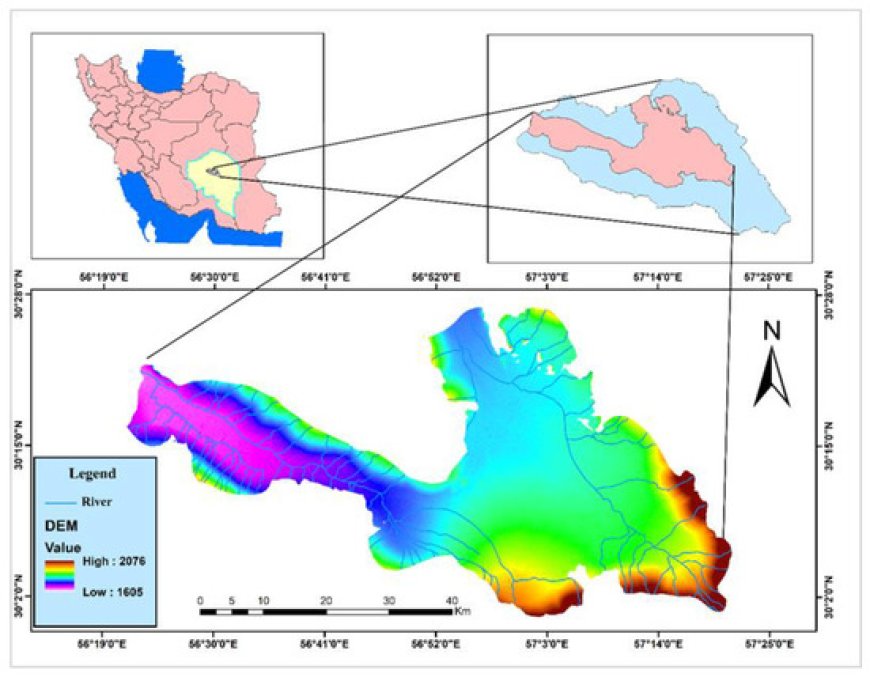
Climate change affects hydroclimatic variables, and assessing the uncertainty in future predictions is crucial. This study aims to explore variations in temperature and precipitation in the Kerman Plain under climate change impacts between 2023 and 2054. For this purpose, two climate models, MRI-ESM-2 and BCC-CSM2-MR, were used to simulate precipitation and temperature under two different scenarios. The Mann–Kendall test was employed to analyze the annual time series in the future period. The results indicated an increase in the average temperature of about 1.5 degrees Celsius based on both scenarios in the coming years. Furthermore, an average annual increase of 6.37 mm of precipitation was predicted under the SSP585 scenario. Meanwhile, under the SSP585 scenario, an increase was estimated using the MRI-ESM-2 model, and a decrease was predicted with the BCC-CSM2-MR model. The Mann–Kendall test revealed a downward trend in the BCC-CSM2-MR model under both scenarios and an upward trend in the MRI-ESM-2 model under both scenarios. The bootstrap method and the R-factor index were exploited in this study with a 95% confidence interval to estimate the uncertainty of the predicted data. The results demonstrated that the predicted precipitation is more uncertain than the temperature. Finally, it is postulated that the obtained results provide necessary information for water resource management under a changing climate in the study area.
Hydrology, Vol. 11, Pages 2: Investigating Uncertainty of Future Predictions of Temperature and Precipitation in The Kerman Plain under Climate Change Impacts
Hydrology doi: 10.3390/hydrology11010002
Authors: Mohammad Reza Goodarzi Mahnaz Heydaripour Vahid Jamali Maryam Sabaghzadeh Majid Niazkar
Climate change affects hydroclimatic variables, and assessing the uncertainty in future predictions is crucial. This study aims to explore variations in temperature and precipitation in the Kerman Plain under climate change impacts between 2023 and 2054. For this purpose, two climate models, MRI-ESM-2 and BCC-CSM2-MR, were used to simulate precipitation and temperature under two different scenarios. The Mann–Kendall test was employed to analyze the annual time series in the future period. The results indicated an increase in the average temperature of about 1.5 degrees Celsius based on both scenarios in the coming years. Furthermore, an average annual increase of 6.37 mm of precipitation was predicted under the SSP585 scenario. Meanwhile, under the SSP585 scenario, an increase was estimated using the MRI-ESM-2 model, and a decrease was predicted with the BCC-CSM2-MR model. The Mann–Kendall test revealed a downward trend in the BCC-CSM2-MR model under both scenarios and an upward trend in the MRI-ESM-2 model under both scenarios. The bootstrap method and the R-factor index were exploited in this study with a 95% confidence interval to estimate the uncertainty of the predicted data. The results demonstrated that the predicted precipitation is more uncertain than the temperature. Finally, it is postulated that the obtained results provide necessary information for water resource management under a changing climate in the study area.
What's Your Reaction?