Hydrology, Vol. 10, Pages 232: The Seasonal Variability and Environmental Factors Influencing the Transpiration of Western Juniper (Juniperus occidentalis) Saplings
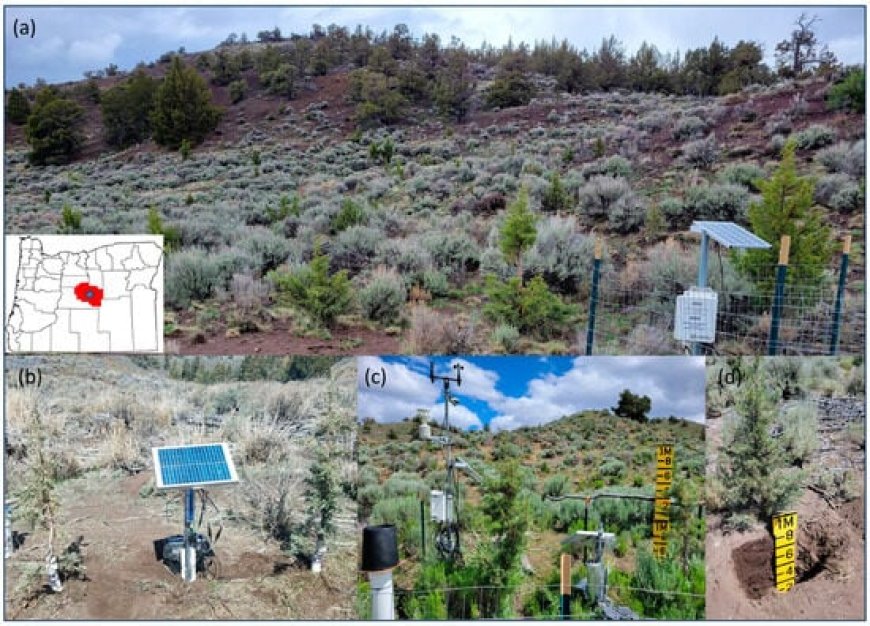
There is scarce information regarding the interactions between young tree water uptake and the environment in water-limited ecosystems. This study was conducted in a semiarid rangeland ecosystem in central Oregon, Pacific Northwest Region, USA. We measured the tree transpiration of western juniper (Juniperus occidentalis) saplings using the stem heat balance (SHB) method. We analyzed the correlation between transpiration and environmental factors affecting the saplings’ water use from May to October for 2017, 2018, 2019, 2021, and 2022. The study results showed that total annual precipitation for all but one year was below the long-term (2005 to 2022) mean precipitation value of 307 mm for the study site. Significantly higher transpiration rates were observed in the wet vs. dry years. The highest monthly averaged transpiration rates (2.95 L d−1) were obtained in August during the above-average precipitation year (2017). Peak transpiration rates for the below-average precipitation years were generally reached in June or July, ranging from 0.91 to 1.65 L d−1. The seasonal response of transpiration to different environmental factors varied. For all years, vapor pressure deficit (VPD), solar radiation (SR), and air temperature (AT) showed a positive correlation with transpiration, whereas precipitation (Pr) and relative humidity (RH) indicated a negative correlation with transpiration. Soil moisture (SM) and soil temperature (ST) positively correlated with transpiration for most years. A strong association between VPD and transpiration was observed during the wettest (2017; 327 mm) and driest (2021; 198 mm) years. Results from this study add to the limited literature on sapling transpiration and can contribute to the improved management of cool-climate rangeland ecosystems through an enhanced understanding of water use by young-stage trees and its potential impacts on the water balance of restored juniper landscapes.
Hydrology, Vol. 10, Pages 232: The Seasonal Variability and Environmental Factors Influencing the Transpiration of Western Juniper (Juniperus occidentalis) Saplings
Hydrology doi: 10.3390/hydrology10120232
Authors: Carlos G. Ochoa Mohamed A. B. Abdallah
There is scarce information regarding the interactions between young tree water uptake and the environment in water-limited ecosystems. This study was conducted in a semiarid rangeland ecosystem in central Oregon, Pacific Northwest Region, USA. We measured the tree transpiration of western juniper (Juniperus occidentalis) saplings using the stem heat balance (SHB) method. We analyzed the correlation between transpiration and environmental factors affecting the saplings’ water use from May to October for 2017, 2018, 2019, 2021, and 2022. The study results showed that total annual precipitation for all but one year was below the long-term (2005 to 2022) mean precipitation value of 307 mm for the study site. Significantly higher transpiration rates were observed in the wet vs. dry years. The highest monthly averaged transpiration rates (2.95 L d−1) were obtained in August during the above-average precipitation year (2017). Peak transpiration rates for the below-average precipitation years were generally reached in June or July, ranging from 0.91 to 1.65 L d−1. The seasonal response of transpiration to different environmental factors varied. For all years, vapor pressure deficit (VPD), solar radiation (SR), and air temperature (AT) showed a positive correlation with transpiration, whereas precipitation (Pr) and relative humidity (RH) indicated a negative correlation with transpiration. Soil moisture (SM) and soil temperature (ST) positively correlated with transpiration for most years. A strong association between VPD and transpiration was observed during the wettest (2017; 327 mm) and driest (2021; 198 mm) years. Results from this study add to the limited literature on sapling transpiration and can contribute to the improved management of cool-climate rangeland ecosystems through an enhanced understanding of water use by young-stage trees and its potential impacts on the water balance of restored juniper landscapes.
What's Your Reaction?