Hydrology, Vol. 10, Pages 225: Estimating Thermal Impact on Groundwater Systems from Heat Pump Technologies: A Simplified Method for High Flow Rates
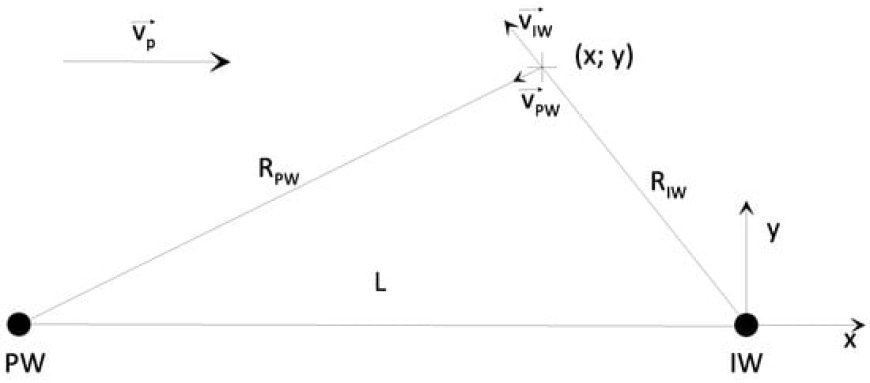
This research delves into the potential thermal effects on underground water systems caused by the use of thermal technologies involving extraction and injection wells. We developed a unique approach that combines straightforward calculations with computer-based modeling to evaluate thermal impacts when water flow rates exceed 2 L/s. Our model, based on a system with two wells and a steady water flow, was used to pinpoint the area around the thermal technology where the temperature varied by more than 1 °C. Our findings suggest that the data-based relationships we derived from our model calculations provide a cautious estimate of the size of the affected area, or ‘thermal cloud’. However, it is important to note that our model’s assumptions might not fully account for the complex variables present in real-world underground water systems. This highlights a need for more research and testing. A key contribution of our study is the development of a new method to assess the thermal impact of operations involving heat pumps. In conclusion, while our proposed method needs more fine-tuning, it shows promise in estimating temperature changes within water-bearing rock layers, or aquifers. This is crucial in the effective use of thermal technologies while also ensuring the protection and sustainable management of our underground water resources.
Hydrology, Vol. 10, Pages 225: Estimating Thermal Impact on Groundwater Systems from Heat Pump Technologies: A Simplified Method for High Flow Rates
Hydrology doi: 10.3390/hydrology10120225
Authors: David Krcmar Tibor Kovacs Matej Molnar Kamila Hodasova Martin Zatlakovic
This research delves into the potential thermal effects on underground water systems caused by the use of thermal technologies involving extraction and injection wells. We developed a unique approach that combines straightforward calculations with computer-based modeling to evaluate thermal impacts when water flow rates exceed 2 L/s. Our model, based on a system with two wells and a steady water flow, was used to pinpoint the area around the thermal technology where the temperature varied by more than 1 °C. Our findings suggest that the data-based relationships we derived from our model calculations provide a cautious estimate of the size of the affected area, or ‘thermal cloud’. However, it is important to note that our model’s assumptions might not fully account for the complex variables present in real-world underground water systems. This highlights a need for more research and testing. A key contribution of our study is the development of a new method to assess the thermal impact of operations involving heat pumps. In conclusion, while our proposed method needs more fine-tuning, it shows promise in estimating temperature changes within water-bearing rock layers, or aquifers. This is crucial in the effective use of thermal technologies while also ensuring the protection and sustainable management of our underground water resources.
What's Your Reaction?