Environments, Vol. 11, Pages 41: Exposure of Zebrafish Embryos to Urea Affects NOS1 Gene Expression in Neuronal Cells
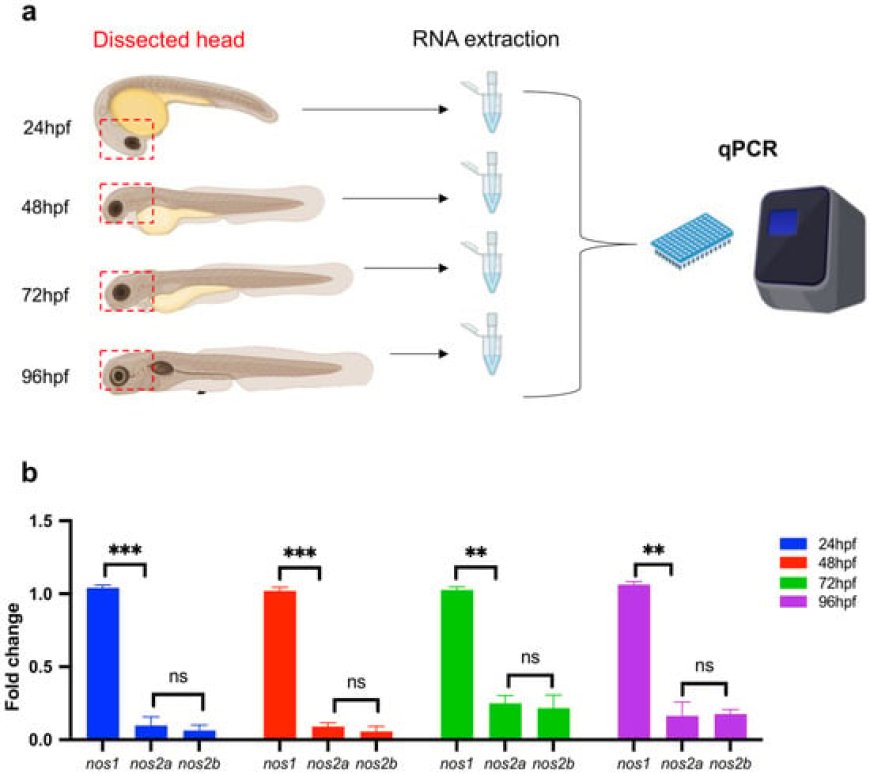
Nitrogen-based fertilizers represent the most common fertilization tools, particularly used in crop food agriculture, despite the low cost-efficiency and the high negative environmental impact. At present, there is still inadequate information available about the effects of urea on human health; nevertheless, previous studies in animals observed that high urea concentration exposure can damage different tissues, including the brain. In several vertebrates, a crucial factor involved in neuronal cell formation is represented by the gas molecule, nitric oxide (NO), derived from the conversion of arginine to citrulline through the enzymatic activity of nitric oxide synthases (NOS). In zebrafish, three different isoforms of the NOS gene are known: nos1, nos2a, and nos2b. In the present study we show that nos1 represents the unique isoform with a stable high expression in the brain and spinal cord during all the embryonic stages of zebrafish development. Then, by using a specific transgenic zebrafish line, Tg(HuC:GFP), to mark neuronal cells, we observed nos1 to be specifically expressed in neurons. Interestingly, we observed that urea exposure at sub-lethal doses affected cell proliferation and the number of nos1-expressing cells, inducing apoptosis. Consistently, brain NO levels were observed to be reduced in urea-treated animals compared to untreated ones. This finding represents the first evidence that urea exposure affects the expression of a key gene involved in neuronal cell formation during embryonic development.
Environments, Vol. 11, Pages 41: Exposure of Zebrafish Embryos to Urea Affects NOS1 Gene Expression in Neuronal Cells
Environments doi: 10.3390/environments11030041
Authors: Pietro Cacialli Serena Ricci Flavia Frabetti Sara Ferrando Valeria Franceschini
Nitrogen-based fertilizers represent the most common fertilization tools, particularly used in crop food agriculture, despite the low cost-efficiency and the high negative environmental impact. At present, there is still inadequate information available about the effects of urea on human health; nevertheless, previous studies in animals observed that high urea concentration exposure can damage different tissues, including the brain. In several vertebrates, a crucial factor involved in neuronal cell formation is represented by the gas molecule, nitric oxide (NO), derived from the conversion of arginine to citrulline through the enzymatic activity of nitric oxide synthases (NOS). In zebrafish, three different isoforms of the NOS gene are known: nos1, nos2a, and nos2b. In the present study we show that nos1 represents the unique isoform with a stable high expression in the brain and spinal cord during all the embryonic stages of zebrafish development. Then, by using a specific transgenic zebrafish line, Tg(HuC:GFP), to mark neuronal cells, we observed nos1 to be specifically expressed in neurons. Interestingly, we observed that urea exposure at sub-lethal doses affected cell proliferation and the number of nos1-expressing cells, inducing apoptosis. Consistently, brain NO levels were observed to be reduced in urea-treated animals compared to untreated ones. This finding represents the first evidence that urea exposure affects the expression of a key gene involved in neuronal cell formation during embryonic development.
What's Your Reaction?