Environments, Vol. 11, Pages 29: Zeolite and Winery Waste as Innovative By-Product for Vineyard Soil Management
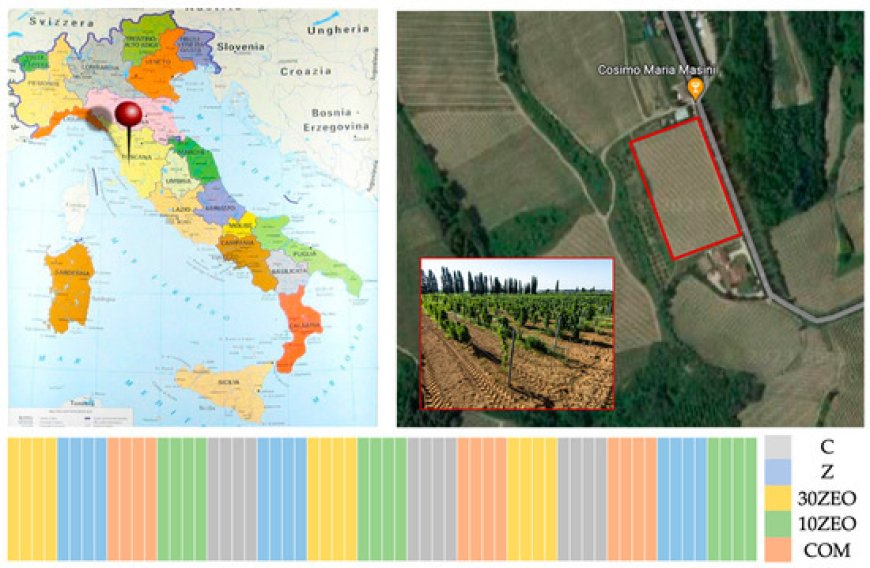
In semiarid environments, vine cultivation is a land use with a high impact with regard to soil erosion, loss of organic matter and biodiversity, contamination, and compaction. In addition, the wine supply chain produces a considerable quantity of organic waste, which remains as residues in the ecosystem. Within this context, we developed a sustainable vine management system to improve the efficient use of fertilisers by applying a by-product derived from the composting of winery wastes and zeolite. We evaluated the effects of the zeolite-based compost on the chemical, physical, and biochemical soil properties of a productive vineyard. Four treatments were set up and monitored for about two years. These were as follows: (1) Commercial compost (COM); (2) Zeolite (Z); (3) 30% zeolite and 70% winery waste compost (30 ZEO); (4) 10% zeolite and 90% winery waste compost (10 ZEO). The results demonstrated that the ZEO treatments could be considered a win–win solution able to improve soil water content, nutrient retention, carbon sequestration, and biochemical activity while also recycling wastes. In particular, 10 ZEO seems to be the amendment that best combines an improvement in soil biochemical properties with gradual and constant nutrient availability, thus satisfying, without exceeding, soil and plant needs.
Environments, Vol. 11, Pages 29: Zeolite and Winery Waste as Innovative By-Product for Vineyard Soil Management
Environments doi: 10.3390/environments11020029
Authors: Serena Doni Grazia Masciandaro Cristina Macci Davide Manzi Giovan Battista Mattii Eleonora Cataldo Maria Gispert Francesca Vannucchi Eleonora Peruzzi
In semiarid environments, vine cultivation is a land use with a high impact with regard to soil erosion, loss of organic matter and biodiversity, contamination, and compaction. In addition, the wine supply chain produces a considerable quantity of organic waste, which remains as residues in the ecosystem. Within this context, we developed a sustainable vine management system to improve the efficient use of fertilisers by applying a by-product derived from the composting of winery wastes and zeolite. We evaluated the effects of the zeolite-based compost on the chemical, physical, and biochemical soil properties of a productive vineyard. Four treatments were set up and monitored for about two years. These were as follows: (1) Commercial compost (COM); (2) Zeolite (Z); (3) 30% zeolite and 70% winery waste compost (30 ZEO); (4) 10% zeolite and 90% winery waste compost (10 ZEO). The results demonstrated that the ZEO treatments could be considered a win–win solution able to improve soil water content, nutrient retention, carbon sequestration, and biochemical activity while also recycling wastes. In particular, 10 ZEO seems to be the amendment that best combines an improvement in soil biochemical properties with gradual and constant nutrient availability, thus satisfying, without exceeding, soil and plant needs.
What's Your Reaction?