Climate, Vol. 12, Pages 67: Two Decades of Integrated Flood Management: Status, Barriers, and Strategies
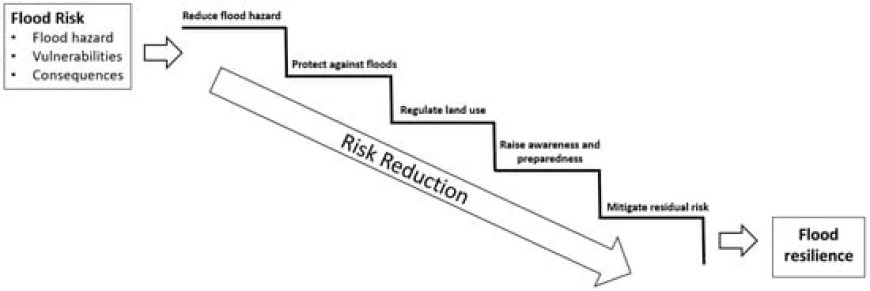
Losses from flood disasters are increasing globally due to climate-driven forces and human factors such as migration and land use changes. The risks of such floods involve multiple factors and stakeholders, and frameworks for integrated approaches have attracted a global community of experts. The paper reviews the knowledge base for integrated flood risk management frameworks, including more than twenty bibliometric reviews of their elements. The knowledge base illustrates how integrated strategies for the reduction of flood risk are required at different scales and involve responses ranging from climate and weather studies to the construction of infrastructure, as well as collective action for community resilience. The Integrated Flood Management framework of the Associated Programme on Flood Management of the World Meteorological Organization was developed more than twenty years ago and is explained in some detail, including how it fits within the Integrated Water Resources Management concept that is managed by the Global Water Partnership. The paper reviews the alignment of the two approaches and how they can be used in tandem to reduce flood losses. Success of both integrated management approaches depends on governance and institutional capacity as well as technological advances. The knowledge base for flood risk management indicates how technologies are advancing, while more attention must be paid to social and environmental concerns, as well as government measures to increase participation, awareness, and preparedness. Ultimately, integrated flood management will involve solutions tailored for individual situations, and implementation may be slow, such that perseverance and political commitment will be needed.
Climate, Vol. 12, Pages 67: Two Decades of Integrated Flood Management: Status, Barriers, and Strategies
Climate doi: 10.3390/cli12050067
Authors: Neil S. Grigg
Losses from flood disasters are increasing globally due to climate-driven forces and human factors such as migration and land use changes. The risks of such floods involve multiple factors and stakeholders, and frameworks for integrated approaches have attracted a global community of experts. The paper reviews the knowledge base for integrated flood risk management frameworks, including more than twenty bibliometric reviews of their elements. The knowledge base illustrates how integrated strategies for the reduction of flood risk are required at different scales and involve responses ranging from climate and weather studies to the construction of infrastructure, as well as collective action for community resilience. The Integrated Flood Management framework of the Associated Programme on Flood Management of the World Meteorological Organization was developed more than twenty years ago and is explained in some detail, including how it fits within the Integrated Water Resources Management concept that is managed by the Global Water Partnership. The paper reviews the alignment of the two approaches and how they can be used in tandem to reduce flood losses. Success of both integrated management approaches depends on governance and institutional capacity as well as technological advances. The knowledge base for flood risk management indicates how technologies are advancing, while more attention must be paid to social and environmental concerns, as well as government measures to increase participation, awareness, and preparedness. Ultimately, integrated flood management will involve solutions tailored for individual situations, and implementation may be slow, such that perseverance and political commitment will be needed.
What's Your Reaction?