Climate, Vol. 12, Pages 32: Historical Climate Trends and Extreme Weather Events in the Tri-State Area: A Detailed Analysis of Urban and Suburban Differences
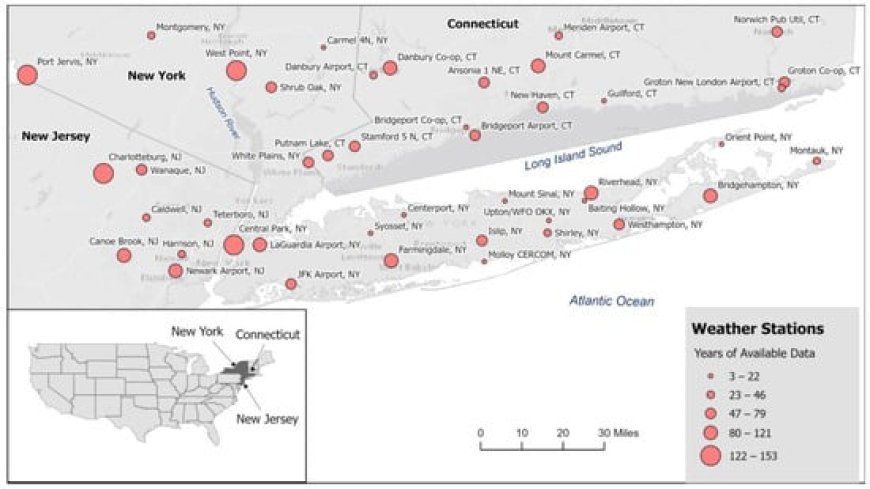
This study analyzes daily temperature and precipitation data collected from 44 weather stations throughout New York, New Jersey, and Connecticut to assess and quantify the historical climatic changes within these states. The study conducts a detailed examination of spatial and temporal trends, focusing on specific stations that best represent the climatic diversity of each area. A critical analysis aspect involves comparing temperature trends in urban and suburban areas, mainly focusing on New York City. The findings reveal a significant upward increasing trend in average temperatures across all seasons, with urban areas, especially NYC, exhibiting the most marked increases. This trend is notably sharp in the spring, reflecting climate change’s escalating influence. The study also observes an increase in the annual average temperatures and a concurrent decrease in the variability of temperature ranges, suggesting a stabilization of temperature fluctuations over time. Also, we identified a notable increase in heat wave frequency, more so in urban locales than in their suburban counterparts. Analysis of precipitation patterns, particularly in NYC, reveals a decline in snowfall days, consistent with the general warming trend. The results demonstrate significant trends in seasonal average temperatures, a decrease in the variability of temperatures, and a rise in heat wave occurrences, with urban areas typically experiencing warmer conditions. This comprehensive study highlights the need for a more in-depth analysis of spatial precipitation trends. It underscores the importance of continued research in understanding the multifaceted impacts of climate change, particularly in differentiating urban and rural experiences.
Climate, Vol. 12, Pages 32: Historical Climate Trends and Extreme Weather Events in the Tri-State Area: A Detailed Analysis of Urban and Suburban Differences
Climate doi: 10.3390/cli12030032
Authors: Sameeha Malikah Stephanie Avila Gabriella Garcia Tarendra Lakhankar
This study analyzes daily temperature and precipitation data collected from 44 weather stations throughout New York, New Jersey, and Connecticut to assess and quantify the historical climatic changes within these states. The study conducts a detailed examination of spatial and temporal trends, focusing on specific stations that best represent the climatic diversity of each area. A critical analysis aspect involves comparing temperature trends in urban and suburban areas, mainly focusing on New York City. The findings reveal a significant upward increasing trend in average temperatures across all seasons, with urban areas, especially NYC, exhibiting the most marked increases. This trend is notably sharp in the spring, reflecting climate change’s escalating influence. The study also observes an increase in the annual average temperatures and a concurrent decrease in the variability of temperature ranges, suggesting a stabilization of temperature fluctuations over time. Also, we identified a notable increase in heat wave frequency, more so in urban locales than in their suburban counterparts. Analysis of precipitation patterns, particularly in NYC, reveals a decline in snowfall days, consistent with the general warming trend. The results demonstrate significant trends in seasonal average temperatures, a decrease in the variability of temperatures, and a rise in heat wave occurrences, with urban areas typically experiencing warmer conditions. This comprehensive study highlights the need for a more in-depth analysis of spatial precipitation trends. It underscores the importance of continued research in understanding the multifaceted impacts of climate change, particularly in differentiating urban and rural experiences.
What's Your Reaction?