Climate, Vol. 12, Pages 20: Extremely Cold Climate and Social Vulnerability in Alaska: Problems and Prospects
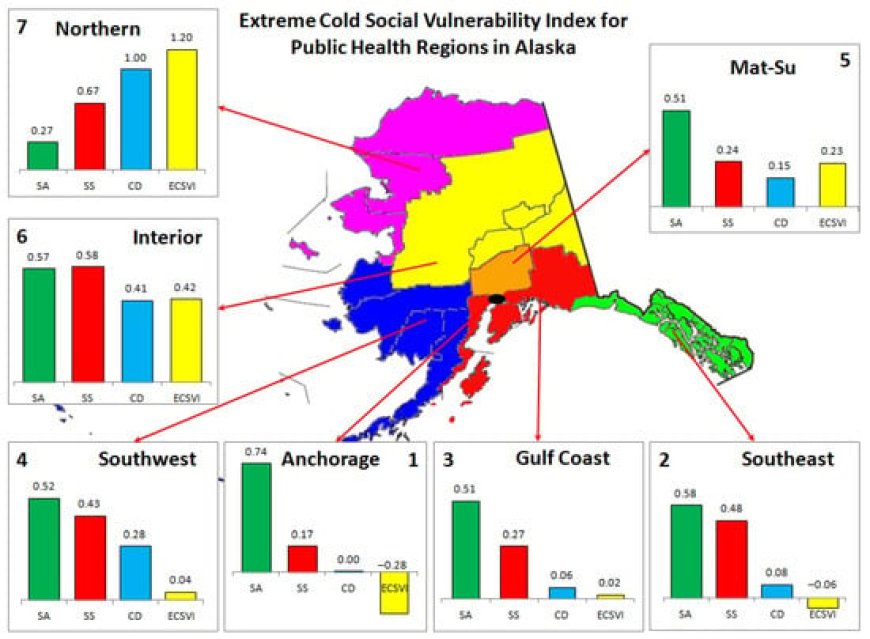
Cold exposure remains a significant public health concern, particularly in the Arctic regions prone to extremely cold weather. While the physical health impacts of cold exposure are well documented, understanding the social vulnerability aspects is crucial for effective mitigation and policy development. This study investigates the multifaceted dimensions of social vulnerability in the face of cold temperatures across various communities in Alaska. Alaska, renowned for its extreme cold temperatures and harsh environmental conditions, poses unique challenges to its residents, particularly in the context of social vulnerability. Drawing on a combination of quantitative data analysis and qualitative insights, we examine the factors contributing to social vulnerability, including demographic, economic, geographic, and infrastructural elements, in terms of the Extremely Cold Social Vulnerability Index, for seven Public Health Regions in Alaska. The Universal Thermal Climate Index in two very cold categories (
Climate, Vol. 12, Pages 20: Extremely Cold Climate and Social Vulnerability in Alaska: Problems and Prospects
Climate doi: 10.3390/cli12020020
Authors: Elena A. Grigorieva John E. Walsh Vladimir A. Alexeev
Cold exposure remains a significant public health concern, particularly in the Arctic regions prone to extremely cold weather. While the physical health impacts of cold exposure are well documented, understanding the social vulnerability aspects is crucial for effective mitigation and policy development. This study investigates the multifaceted dimensions of social vulnerability in the face of cold temperatures across various communities in Alaska. Alaska, renowned for its extreme cold temperatures and harsh environmental conditions, poses unique challenges to its residents, particularly in the context of social vulnerability. Drawing on a combination of quantitative data analysis and qualitative insights, we examine the factors contributing to social vulnerability, including demographic, economic, geographic, and infrastructural elements, in terms of the Extremely Cold Social Vulnerability Index, for seven Public Health Regions in Alaska. The Universal Thermal Climate Index in two very cold categories (<−27 °C) was used to identify cold exposure. Factors such as income, housing quality, health status, and resilience of the population play crucial roles in determining an individual or community’s sensitivity to, and ability to cope with, cold temperatures. Our analysis reveals that social vulnerability in Alaska is not uniform but varies significantly among regions. The research findings highlight the importance of considering factors of both sensitivity and adaptivity in understanding and addressing social vulnerability, thereby informing the development of targeted strategies and policies to enhance the resilience of Alaskan communities. As cold temperatures are projected to continue to challenge the region, addressing social vulnerability is essential for ensuring the well-being and safety of Alaska’s diverse populations.
What's Your Reaction?