Climate, Vol. 11, Pages 237: Residential Wind Loss Mitigation Case Study: An Analysis of Insurance Claim Data for Hurricane Michael
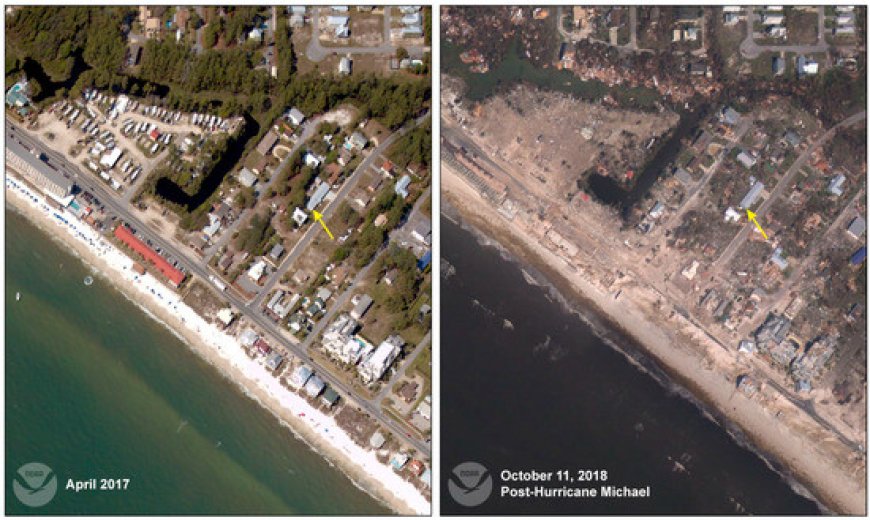
This study analyzes insurance claim data from an 11-county area in the Florida Panhandle following the landfall of Hurricane Michael. The data includes 1467 non-mobile home structures, with 902 (61.5%) storm-damaged structures in Bay County. The analysis focuses on Wind Mitigation form 1802. Specifically, building design variables were analyzed via linear regression as to their influence on the percent claim loss. The building design variables included total square footage, dwelling construction type, age of the building, roof type, roof cover type, roof deck attachment type, roof to wall attachment, the presence of secondary water resistance (or sealed roof deck), opening protection type, and roof shape. Results show that building design variables for insurance claims have a high predictive value relative to a Category 5 hurricane event. However, the predictive values of building design variables are also dependent on the dwelling’s proximity to the coast, its location relative to the strong or weak side of the storm, the diameter of the storm, and other wind field variables.
Climate, Vol. 11, Pages 237: Residential Wind Loss Mitigation Case Study: An Analysis of Insurance Claim Data for Hurricane Michael
Climate doi: 10.3390/cli11120237
Authors: Aneurin Grant Christopher L. Atkinson
This study analyzes insurance claim data from an 11-county area in the Florida Panhandle following the landfall of Hurricane Michael. The data includes 1467 non-mobile home structures, with 902 (61.5%) storm-damaged structures in Bay County. The analysis focuses on Wind Mitigation form 1802. Specifically, building design variables were analyzed via linear regression as to their influence on the percent claim loss. The building design variables included total square footage, dwelling construction type, age of the building, roof type, roof cover type, roof deck attachment type, roof to wall attachment, the presence of secondary water resistance (or sealed roof deck), opening protection type, and roof shape. Results show that building design variables for insurance claims have a high predictive value relative to a Category 5 hurricane event. However, the predictive values of building design variables are also dependent on the dwelling’s proximity to the coast, its location relative to the strong or weak side of the storm, the diameter of the storm, and other wind field variables.
What's Your Reaction?