Climate, Vol. 11, Pages 228: Managing Extreme Rainfall and Flooding Events: A Case Study of the 20 July 2021 Zhengzhou Flood in China
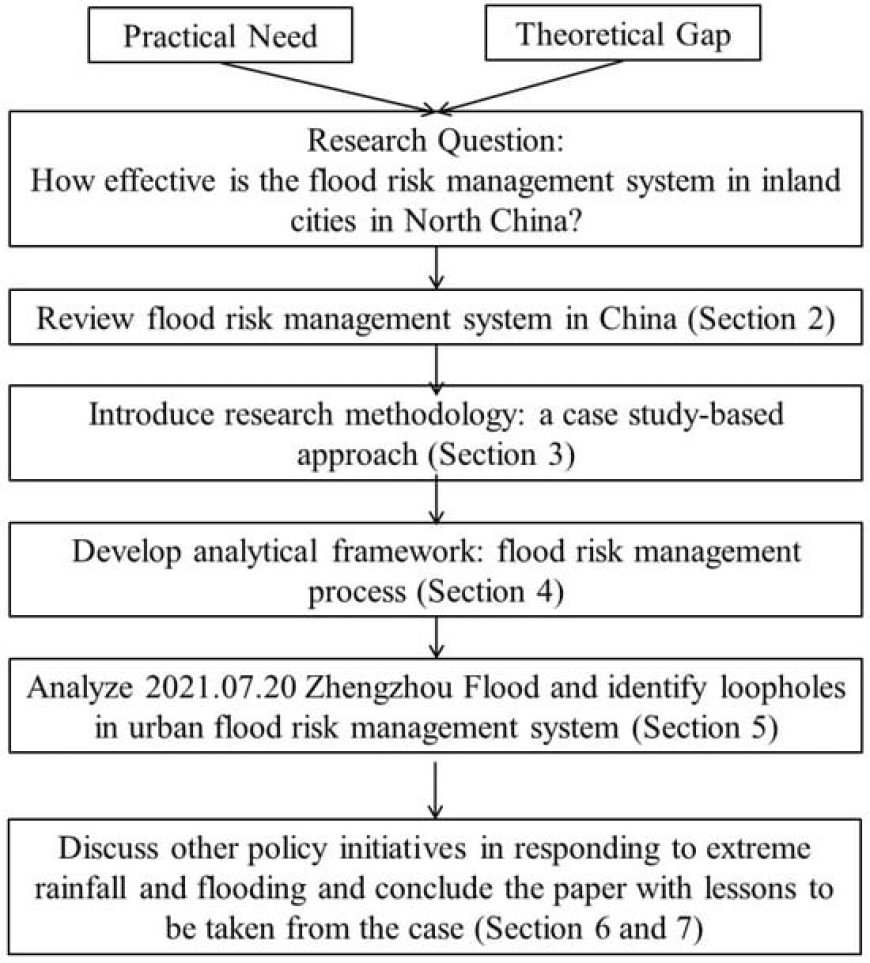
On 20 July 2021, an extreme rainstorm battered Zhengzhou in China’s Henan Province, killing 302 people, including 14 individuals who drowned in a subway tunnel and 6 who drowned in a road tunnel. As the global climate warms, extreme weather events similar to the Zhengzhou flood will become more frequent, with increasingly catastrophic consequences for society. Taking a case study-based approach by focusing on the record-breaking Zhengzhou flood, this paper examines the governance capacity of inland cities in North China for managing extreme precipitation and flooding events from the perspective of the flood risk management process. Based on in-depth case analysis, our paper hypothesizes that inland cities in North China still have low risk perceptions of extreme weather events, which was manifested in insufficient pre-disaster preparation and prevention, poor risk communication, and slow emergency response. Accordingly, it is recommended that inland cities update their risk perceptions of extreme rainfall and flooding events, which are no longer low-probability, high-impact “black swans”, but turning into high-probability, high-impact “gray rhinos.” In particular, cities must make sufficient preparation for extreme weather events by revising contingency plans and strengthening their implementation, improving risk communication of meteorological warnings, and synchronizing emergency response with meteorological warnings.
Climate, Vol. 11, Pages 228: Managing Extreme Rainfall and Flooding Events: A Case Study of the 20 July 2021 Zhengzhou Flood in China
Climate doi: 10.3390/cli11110228
Authors: Xiaofan Zhao Huimin Li Qin Cai Ye Pan Ye Qi
On 20 July 2021, an extreme rainstorm battered Zhengzhou in China’s Henan Province, killing 302 people, including 14 individuals who drowned in a subway tunnel and 6 who drowned in a road tunnel. As the global climate warms, extreme weather events similar to the Zhengzhou flood will become more frequent, with increasingly catastrophic consequences for society. Taking a case study-based approach by focusing on the record-breaking Zhengzhou flood, this paper examines the governance capacity of inland cities in North China for managing extreme precipitation and flooding events from the perspective of the flood risk management process. Based on in-depth case analysis, our paper hypothesizes that inland cities in North China still have low risk perceptions of extreme weather events, which was manifested in insufficient pre-disaster preparation and prevention, poor risk communication, and slow emergency response. Accordingly, it is recommended that inland cities update their risk perceptions of extreme rainfall and flooding events, which are no longer low-probability, high-impact “black swans”, but turning into high-probability, high-impact “gray rhinos.” In particular, cities must make sufficient preparation for extreme weather events by revising contingency plans and strengthening their implementation, improving risk communication of meteorological warnings, and synchronizing emergency response with meteorological warnings.
What's Your Reaction?