Climate, Vol. 11, Pages 207: Autumn Surface Wind Trends over California during 1979–2020
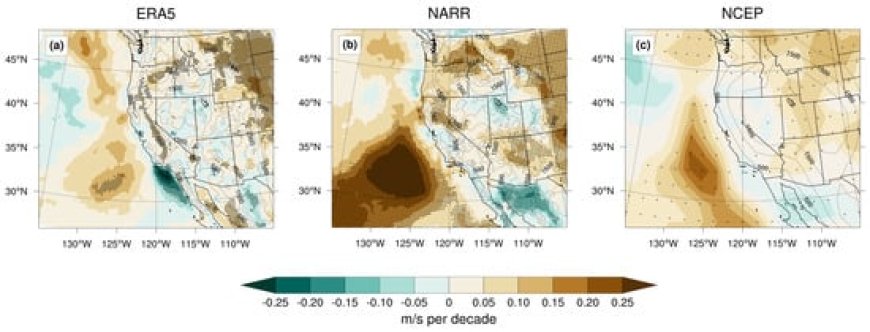
Surface winds over California can compound fire risk during autumn, yet their long-term trends in the face of decadal warming are less clear compared to other climate variables like temperature, drought, and snowmelt. To determine where and how surface winds are changing most, this article uses multiple reanalyses and Remote Automated Weather Stations (RAWS) to calculate autumn 10 m wind speed trends during 1979–2020. Reanalysis trends show statistically significant increases in autumn night-time easterlies on the western slopes of the Sierra Nevada. Although downslope windstorms are frequent to this region, trends instead appear to result from elevated gradients in warming between California and the interior continent. The result is a sharper horizontal temperature gradient over the Sierra crest and adjacent free atmosphere above the foothills, strengthening the climatological nocturnal katabatic wind. While RAWS records show broad agreement, their trend is likely influenced by year-to-year changes in the number of observations.
Climate, Vol. 11, Pages 207: Autumn Surface Wind Trends over California during 1979–2020
Climate doi: 10.3390/cli11100207
Authors: Callum F. Thompson Charles Jones Leila Carvalho Anna T. Trugman Donald D. Lucas Daisuke Seto Kevin Varga
Surface winds over California can compound fire risk during autumn, yet their long-term trends in the face of decadal warming are less clear compared to other climate variables like temperature, drought, and snowmelt. To determine where and how surface winds are changing most, this article uses multiple reanalyses and Remote Automated Weather Stations (RAWS) to calculate autumn 10 m wind speed trends during 1979–2020. Reanalysis trends show statistically significant increases in autumn night-time easterlies on the western slopes of the Sierra Nevada. Although downslope windstorms are frequent to this region, trends instead appear to result from elevated gradients in warming between California and the interior continent. The result is a sharper horizontal temperature gradient over the Sierra crest and adjacent free atmosphere above the foothills, strengthening the climatological nocturnal katabatic wind. While RAWS records show broad agreement, their trend is likely influenced by year-to-year changes in the number of observations.
What's Your Reaction?