CivilEng, Vol. 4, Pages 1157-1168: Harnessing Virtual Reality to Mitigate Heat-Related Injuries in Construction Projects
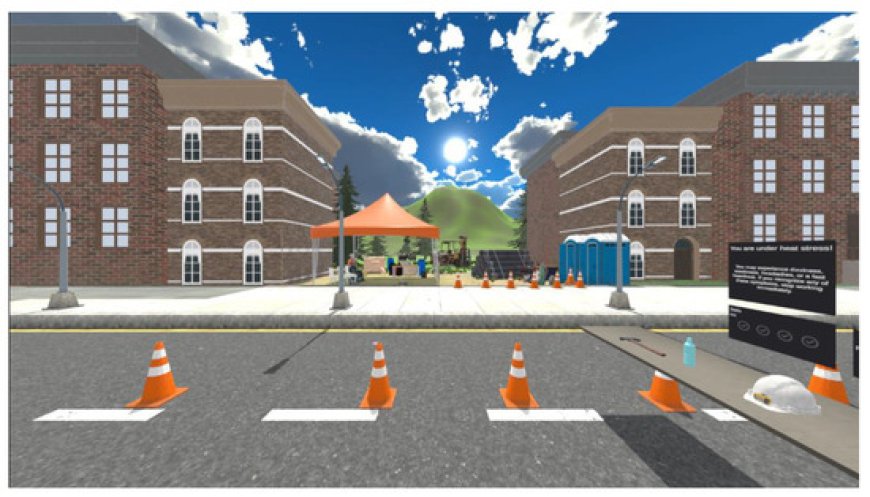
The construction industry has witnessed a surge in heat-related accidents alongside rising summertime temperatures, exposing workers to potential injuries. The absence of specific heat stress standards by the Occupational Safety and Health Administration (OSHA) underscores the urgent need for more comprehensive and interactive educational materials to prevent such incidents in construction projects. This study proposes the adoption of an interactive Virtual Reality (VR) application to offer construction workers realistic and effective training, mitigating heat-related injuries. During the training sessions, VR headsets were utilized to immerse workers in two lifelike scenarios: (1) Addressing self-care during heat exhaustion; (2) Assisting a coworker experiencing heat exhaustion. A case study evaluated the effectiveness of the proposed VR training for 82 construction workers from two companies. Company A had traditional training, while Company B used VR training. Both groups took pre- and post-assessment surveys with six questions. The pre-assessment found no significant knowledge difference between the groups. After training, VR showed a significant reduction in incorrect answers compared to traditional training. Statistical tests confirmed the superiority of VR training (p-value = 0.00152 < 0.05), suggesting its effectiveness in preventing heat-related injuries in construction compared to traditional training methods.
CivilEng, Vol. 4, Pages 1157-1168: Harnessing Virtual Reality to Mitigate Heat-Related Injuries in Construction Projects
CivilEng doi: 10.3390/civileng4040063
Authors: Ammar Alzarrad Matthew Miller Sudipta Chowdhury James McIntosh Tyler Perry Ryan Shen
The construction industry has witnessed a surge in heat-related accidents alongside rising summertime temperatures, exposing workers to potential injuries. The absence of specific heat stress standards by the Occupational Safety and Health Administration (OSHA) underscores the urgent need for more comprehensive and interactive educational materials to prevent such incidents in construction projects. This study proposes the adoption of an interactive Virtual Reality (VR) application to offer construction workers realistic and effective training, mitigating heat-related injuries. During the training sessions, VR headsets were utilized to immerse workers in two lifelike scenarios: (1) Addressing self-care during heat exhaustion; (2) Assisting a coworker experiencing heat exhaustion. A case study evaluated the effectiveness of the proposed VR training for 82 construction workers from two companies. Company A had traditional training, while Company B used VR training. Both groups took pre- and post-assessment surveys with six questions. The pre-assessment found no significant knowledge difference between the groups. After training, VR showed a significant reduction in incorrect answers compared to traditional training. Statistical tests confirmed the superiority of VR training (p-value = 0.00152 < 0.05), suggesting its effectiveness in preventing heat-related injuries in construction compared to traditional training methods.
What's Your Reaction?