AI, Vol. 5, Pages 177-194: Secure Internet Financial Transactions: A Framework Integrating Multi-Factor Authentication and Machine Learning
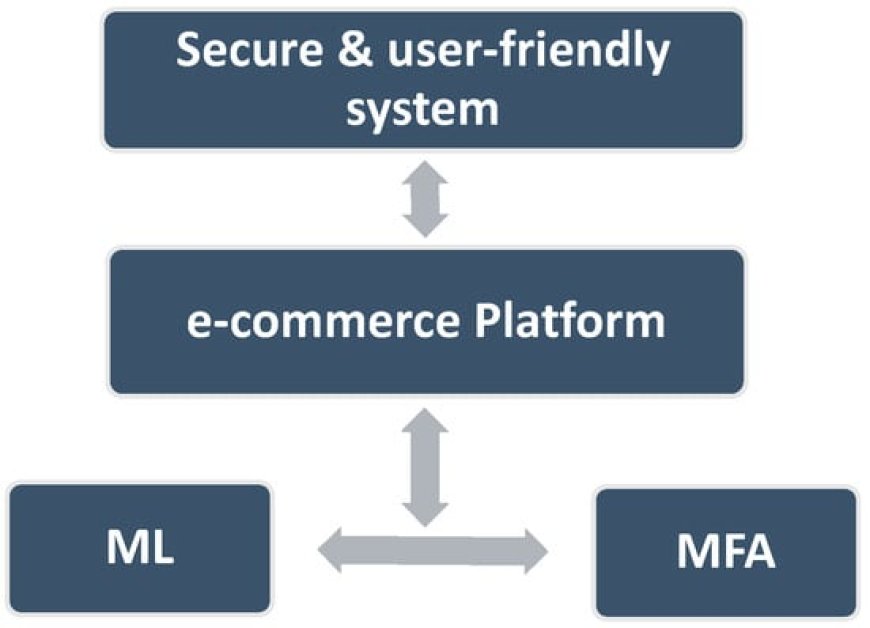
Securing online financial transactions has become a critical concern in an era where financial services are becoming more and more digital. The transition to digital platforms for conducting daily transactions exposed customers to possible risks from cybercriminals. This study proposed a framework that combines multi-factor authentication and machine learning to increase the safety of online financial transactions. Our methodology is based on using two layers of security. The first layer incorporates two factors to authenticate users. The second layer utilizes a machine learning component, which is triggered when the system detects a potential fraud. This machine learning layer employs facial recognition as a decisive authentication factor for further protection. To build the machine learning model, four supervised classifiers were tested: logistic regression, decision trees, random forest, and naive Bayes. The results showed that the accuracy of each classifier was 97.938%, 97.881%, 96.717%, and 92.354%, respectively. This study’s superiority is due to its methodology, which integrates machine learning as an embedded layer in a multi-factor authentication framework to address usability, efficacy, and the dynamic nature of various e-commerce platform features. With the evolving financial landscape, a continuous exploration of authentication factors and datasets to enhance and adapt security measures will be considered in future work.
AI, Vol. 5, Pages 177-194: Secure Internet Financial Transactions: A Framework Integrating Multi-Factor Authentication and Machine Learning
Authors: AlsharifHasan Mohamad Aburbeian Manuel Fernández-Veiga
Securing online financial transactions has become a critical concern in an era where financial services are becoming more and more digital. The transition to digital platforms for conducting daily transactions exposed customers to possible risks from cybercriminals. This study proposed a framework that combines multi-factor authentication and machine learning to increase the safety of online financial transactions. Our methodology is based on using two layers of security. The first layer incorporates two factors to authenticate users. The second layer utilizes a machine learning component, which is triggered when the system detects a potential fraud. This machine learning layer employs facial recognition as a decisive authentication factor for further protection. To build the machine learning model, four supervised classifiers were tested: logistic regression, decision trees, random forest, and naive Bayes. The results showed that the accuracy of each classifier was 97.938%, 97.881%, 96.717%, and 92.354%, respectively. This study’s superiority is due to its methodology, which integrates machine learning as an embedded layer in a multi-factor authentication framework to address usability, efficacy, and the dynamic nature of various e-commerce platform features. With the evolving financial landscape, a continuous exploration of authentication factors and datasets to enhance and adapt security measures will be considered in future work.
What's Your Reaction?