


















AI, Vol. 4, Pages 904-925: From Trustworthy Principles to a Trustworthy Development Process: The Need and Elements of Trusted Development of AI Systems
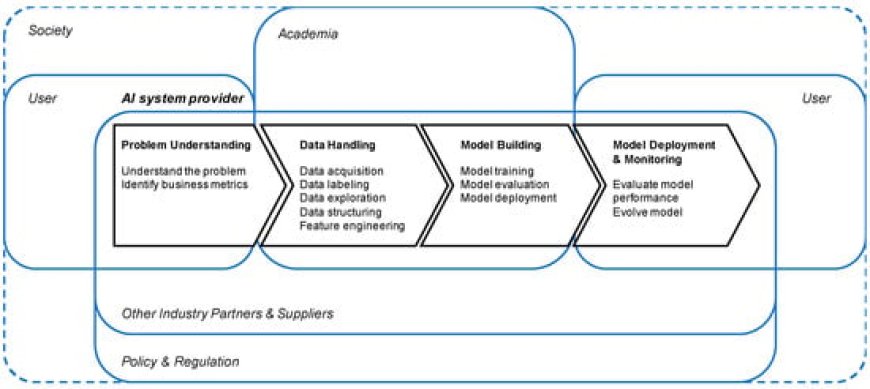
The current endeavor of moving AI ethics from theory to practice can frequently be observed in academia and industry and indicates a major achievement in the theoretical understanding of responsible AI. Its practical application, however, currently poses challenges, as mechanisms for translating the proposed principles into easily feasible actions are often considered unclear and not ready for practice. In particular, a lack of uniform, standardized approaches that are aligned with regulatory provisions is often highlighted by practitioners as a major drawback to the practical realization of AI governance. To address these challenges, we propose a stronger shift in focus from solely the trustworthiness of AI products to the perceived trustworthiness of the development process by introducing a concept for a trustworthy development process for AI systems. We derive this process from a semi-systematic literature analysis of common AI governance documents to identify the most prominent measures for operationalizing responsible AI and compare them to implications for AI providers from EU-centered regulatory frameworks. Assessing the resulting process along derived characteristics of trustworthy processes shows that, while clarity is often mentioned as a major drawback, and many AI providers tend to wait for finalized regulations before reacting, the summarized landscape of proposed AI governance mechanisms can already cover many of the binding and non-binding demands circulating similar activities to address fundamental risks. Furthermore, while many factors of procedural trustworthiness are already fulfilled, limitations are seen particularly due to the vagueness of currently proposed measures, calling for a detailing of measures based on use cases and the system’s context.
AI, Vol. 4, Pages 904-925: From Trustworthy Principles to a Trustworthy Development Process: The Need and Elements of Trusted Development of AI Systems
Authors: Ellen Hohma Christoph Lütge
The current endeavor of moving AI ethics from theory to practice can frequently be observed in academia and industry and indicates a major achievement in the theoretical understanding of responsible AI. Its practical application, however, currently poses challenges, as mechanisms for translating the proposed principles into easily feasible actions are often considered unclear and not ready for practice. In particular, a lack of uniform, standardized approaches that are aligned with regulatory provisions is often highlighted by practitioners as a major drawback to the practical realization of AI governance. To address these challenges, we propose a stronger shift in focus from solely the trustworthiness of AI products to the perceived trustworthiness of the development process by introducing a concept for a trustworthy development process for AI systems. We derive this process from a semi-systematic literature analysis of common AI governance documents to identify the most prominent measures for operationalizing responsible AI and compare them to implications for AI providers from EU-centered regulatory frameworks. Assessing the resulting process along derived characteristics of trustworthy processes shows that, while clarity is often mentioned as a major drawback, and many AI providers tend to wait for finalized regulations before reacting, the summarized landscape of proposed AI governance mechanisms can already cover many of the binding and non-binding demands circulating similar activities to address fundamental risks. Furthermore, while many factors of procedural trustworthiness are already fulfilled, limitations are seen particularly due to the vagueness of currently proposed measures, calling for a detailing of measures based on use cases and the system’s context.
What's Your Reaction?