AI, Vol. 4, Pages 437-460: Machine-Learning-Based Prediction Modelling in Primary Care: State-of-the-Art Review
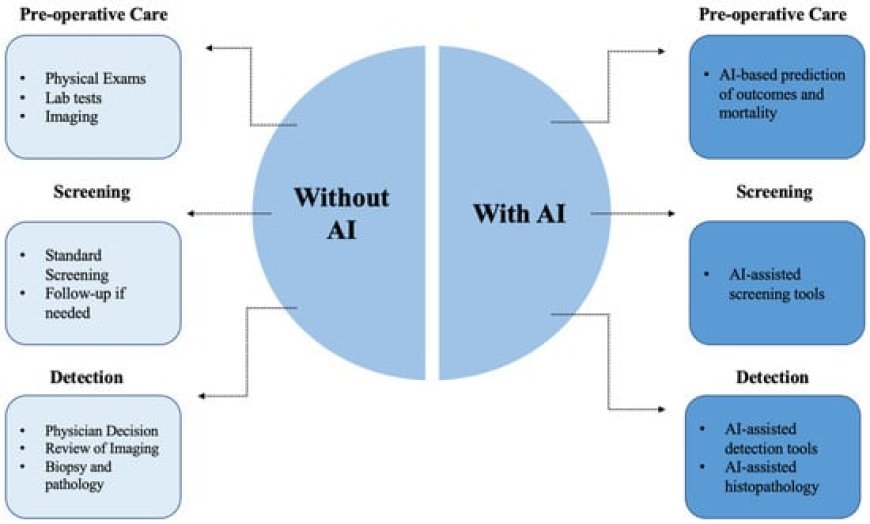
Primary care has the potential to be transformed by artificial intelligence (AI) and, in particular, machine learning (ML). This review summarizes the potential of ML and its subsets in influencing two domains of primary care: pre-operative care and screening. ML can be utilized in preoperative treatment to forecast postoperative results and assist physicians in selecting surgical interventions. Clinicians can modify their strategy to reduce risk and enhance outcomes using ML algorithms to examine patient data and discover factors that increase the risk of worsened health outcomes. ML can also enhance the precision and effectiveness of screening tests. Healthcare professionals can identify diseases at an early and curable stage by using ML models to examine medical pictures, diagnostic modalities, and spot patterns that may suggest disease or anomalies. Before the onset of symptoms, ML can be used to identify people at an increased risk of developing specific disorders or diseases. ML algorithms can assess patient data such as medical history, genetics, and lifestyle factors to identify those at higher risk. This enables targeted interventions such as lifestyle adjustments or early screening. In general, using ML in primary care offers the potential to enhance patient outcomes, reduce healthcare costs, and boost productivity.
AI, Vol. 4, Pages 437-460: Machine-Learning-Based Prediction Modelling in Primary Care: State-of-the-Art Review
Authors: Adham H. El-Sherbini Hafeez Ul Hassan Virk Zhen Wang Benjamin S. Glicksberg Chayakrit Krittanawong
Primary care has the potential to be transformed by artificial intelligence (AI) and, in particular, machine learning (ML). This review summarizes the potential of ML and its subsets in influencing two domains of primary care: pre-operative care and screening. ML can be utilized in preoperative treatment to forecast postoperative results and assist physicians in selecting surgical interventions. Clinicians can modify their strategy to reduce risk and enhance outcomes using ML algorithms to examine patient data and discover factors that increase the risk of worsened health outcomes. ML can also enhance the precision and effectiveness of screening tests. Healthcare professionals can identify diseases at an early and curable stage by using ML models to examine medical pictures, diagnostic modalities, and spot patterns that may suggest disease or anomalies. Before the onset of symptoms, ML can be used to identify people at an increased risk of developing specific disorders or diseases. ML algorithms can assess patient data such as medical history, genetics, and lifestyle factors to identify those at higher risk. This enables targeted interventions such as lifestyle adjustments or early screening. In general, using ML in primary care offers the potential to enhance patient outcomes, reduce healthcare costs, and boost productivity.
What's Your Reaction?